Web3 Backend Architecture: How to Build APIs That Talk to Blockchain
Table of Contents
Table of Contents
Share
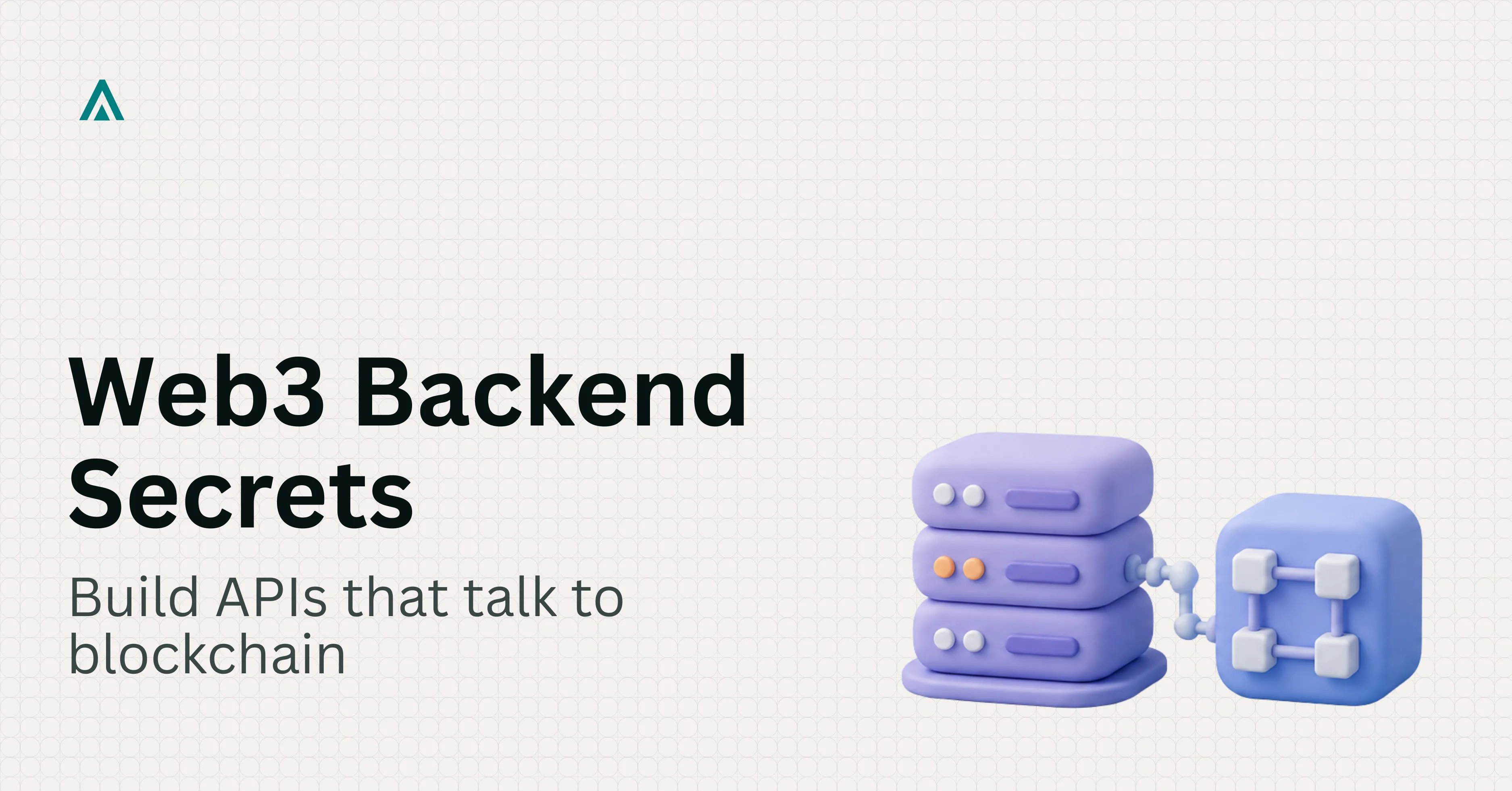
Build production Web3 backends: event indexing with Envio and The Graph, JSON-RPC vs gRPC performance benchmarks, and AI-ready API design patterns for 2025.
Frequently Asked Questions
- Etherscan is excellent for human debugging but too rigid for production dApps. Its API does not support custom relational queries such as returning all users who own more than 100 tokens and have interacted with a specific NFT contract. Building your own indexer is the only way to own your data destiny and maintain performance at scale.
- The modern standard is a schema-first strategy. Your backend database should include a chainId column for every entry regardless of the source chain. Frameworks like Envio are specifically engineered to sync data from dozens of different EVM chains into a single unified PostgreSQL schema, making multi-chain dashboards and analytics straightforward to build.
- Serverless is ideal for stateless tasks such as value conversions, metadata signing, or gas estimation. For stateful tasks like maintaining a real-time event index or a dedicated indexing cluster, you require long-running instances on EC2, Kubernetes, or bare metal to maintain stable WebSocket connections and persistent high-throughput database state.
- NoSQL such as MongoDB is excellent for storing decoded heterogeneous metadata like NFT traits, unstructured logs, or IPFS JSON blobs. For financial accounting including balances, transaction histories, and ledger audits, a relational database like PostgreSQL is the superior choice due to its strict ACID compliance and powerful aggregation capabilities essential for Web3 data integrity.
Don't Miss What's Next
Subscribe to newsletter
Tags:
Web3 Backend
API Design
Blockchain Indexing
The Graph
Envio
gRPC
Node.js
Rust
DeFi
DevOps
Get in Touch
Our team will get back to you within 24 hours.