Mempool Monitoring: WebSocket Streams, Filtering, and Alerts
Table of Contents
Table of Contents
Share
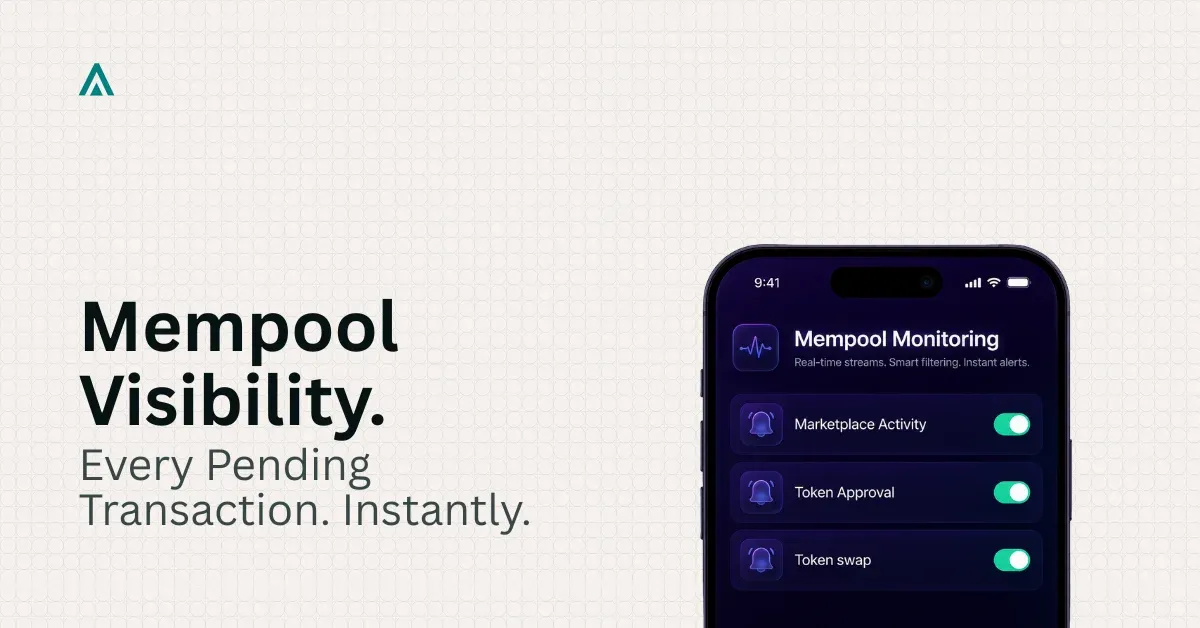
Build production Ethereum mempool monitoring with WebSocket streams, bloom filter pipelines, and real-time alert delivery for DeFi teams. January 2024.
Frequently Asked Questions
- Mempool monitoring is the practice of subscribing to a node's pending transaction pool via WebSocket or JSON-RPC to observe unconfirmed transactions before they are included in a block. It matters because the mempool contains front-running signals, large swap previews, liquidation triggers, and arbitrage opportunities that are invisible to post-block indexers.
- Production filtering uses a layered approach: a bloom filter or address index eliminates irrelevant transactions at ingestion, then a fast ABI decoder identifies method selectors for target contracts, and finally a rule engine applies value, gas, and slippage thresholds. This layered pipeline reduces the processing burden by 90 to 99 percent compared to decoding every pending transaction.
- Production systems use a multi-channel alert stack: low-latency WebSocket push to internal consumers (sub-100ms), Kafka or Redis pub-sub for fan-out to multiple downstream services, and HTTP webhook delivery for external integrations. Critical alerts (liquidation triggers, large swap previews) use a priority queue to ensure delivery ordering independent of system load.
Don't Miss What's Next
Subscribe to newsletter
Tags:
Mempool
WebSocket
On-Chain Monitoring
Alert Pipelines
DeFi Infrastructure
MEV
Ethereum
Get in Touch
Our team will get back to you within 24 hours.