How to Deploy AI for Payer Denial Appeals in 2026 Guide
Table of Contents
Table of Contents
Share
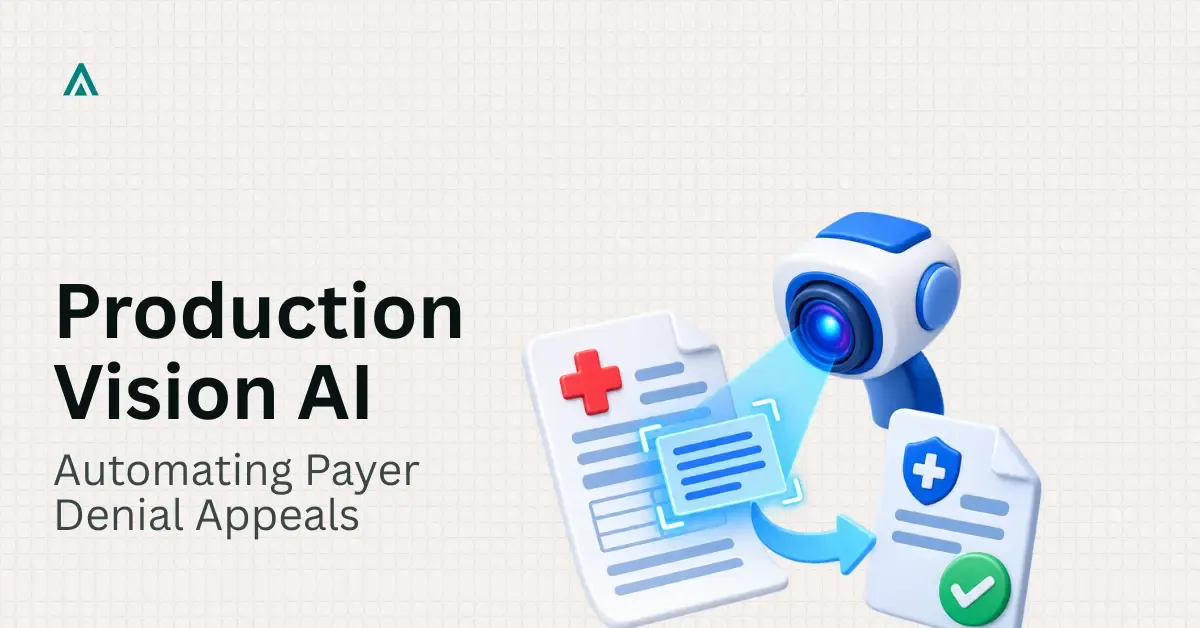
Learn how to deploy production AI for payer denial appeals in 2026: build vs buy costs, deployment timeline, and how to negotiate a cost-reduction SLA.
Frequently Asked Questions
- Yes. Most operators pilot on one high-denial claim category, such as prior authorization for imaging or infusion therapy, before expanding. A scoped MVP covering one payer and one claim type typically ships in six to eight weeks and gives finance a real cost-to-collect baseline before a full rollout.
- The audit phase covers claims data mapping, EHR and clearinghouse integration review, HIPAA and compliance checks, denial reason code taxonomy validation, and model output review by clinical documentation staff. Budget four to six weeks and a fixed audit fee before committing to the full build.
- Vendor-reported results from 2025 show appeal package creation time cut by more than 90 percent and denial-prevention administrative work cut by up to 95 percent at mid-size health systems. A 40 to 50 percent reduction in cost-to-appeal is a defensible SLA target for a first-year contract, tied to time-per-appeal and overturn-rate metrics rather than headcount alone.
- A licensed clinical or coding staff member must review and sign off on every AI-drafted appeal before submission. This human-in-the-loop step is both a compliance requirement under most state insurance codes and a practical safeguard against citing an incorrect clinical guideline.
Don't Miss What's Next
Subscribe to newsletter
Tags:
Healthcare AI
Denial Management
Revenue Cycle
Payer Operations
Get in Touch
Our team will get back to you within 24 hours.