Model-Eval Cost Model for Logistics Route Optimization
Table of Contents
Table of Contents
Share
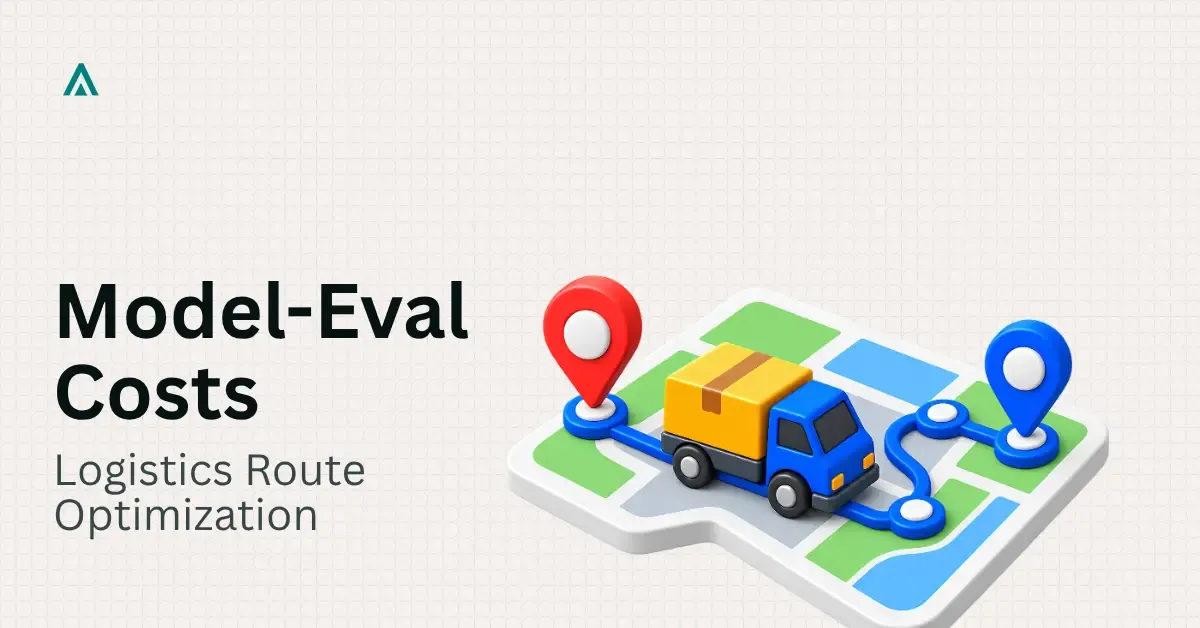
Build a model-eval cost model for logistics route optimization AI: component costs, SLA benchmarks, and how to scope a 50% cost reduction target for 2026.
Frequently Asked Questions
- Yes. A minimum viable eval harness covers one route corridor, 200 to 500 labeled route pairs, and three cost and accuracy metrics. Most fleet operators start at 15,000 to 30,000 dollars for the MVP phase, then expand corridor coverage once the harness proves the 50 percent cost reduction signal is real and not a sampling artifact.
- A model audit covers dataset lineage review, drift detection tooling, adversarial route stress tests, and a written report mapping every failure mode to a remediation owner. For a mid-size fleet, this typically runs 20,000 to 45,000 dollars depending on whether the routing model is a classical solver, a fine-tuned LLM planner, or a hybrid of both.
- Verification requires a locked baseline period before the model goes live, a holdout set of routes the model never trains on, and a monthly reconciliation of actual fuel, labor, and idle-time spend against the pre-deployment baseline. Ancilar builds this reconciliation into the eval harness itself so the SLA number is auditable, not self-reported by the vendor.
Don't Miss What's Next
Subscribe to newsletter
Tags:
model evaluation
logistics AI cost
route optimization
AI TCO
AI & Enterprise Use Cases
Get in Touch
Our team will get back to you within 24 hours.