
Software Engineering for Agriculture
Connect field records, advisory workflows, and supply chain events around daily farm operations.
We build mobile-first applications and integrations for farm, agribusiness, and service teams, with clear data ownership.
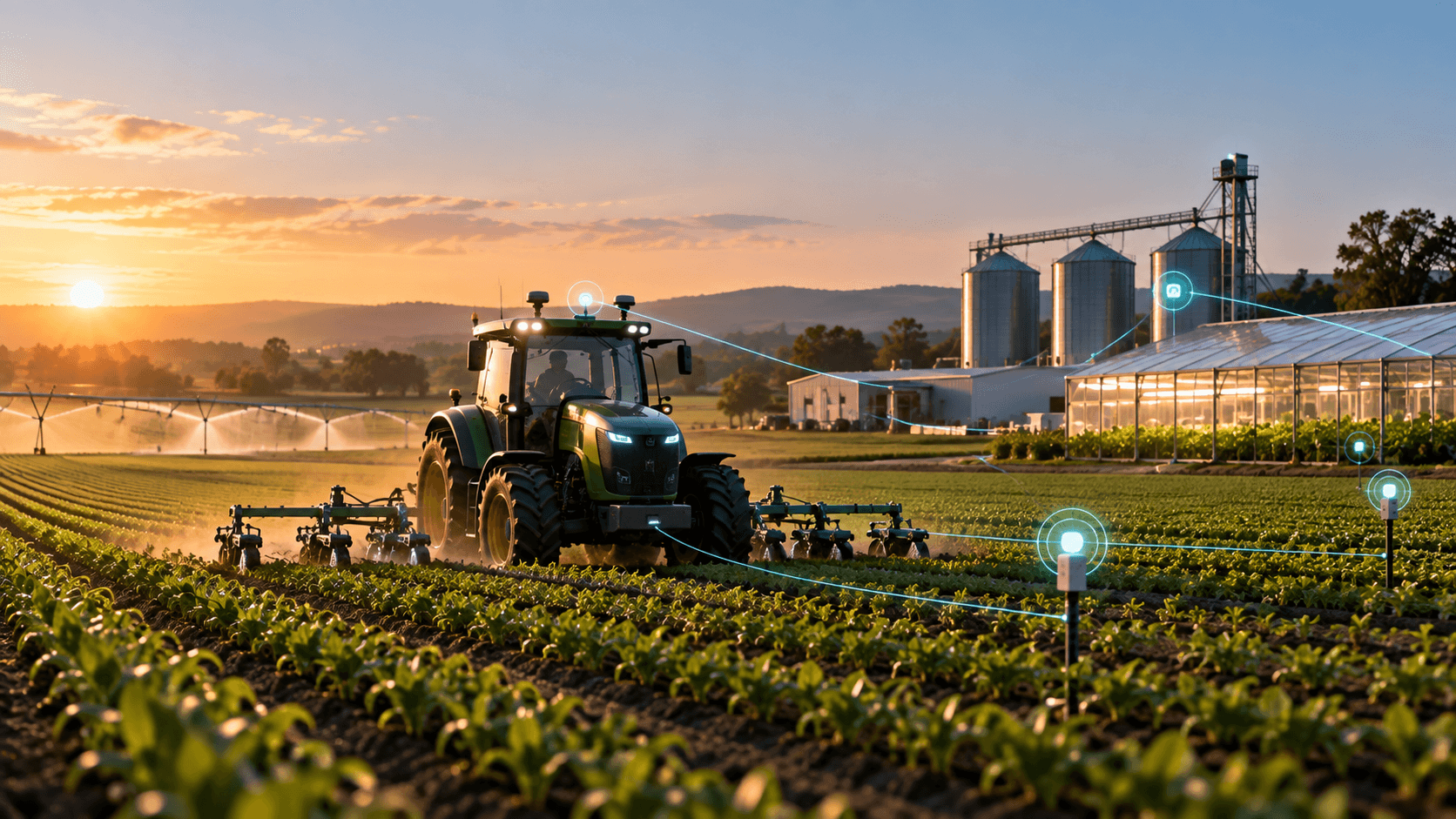
Connected Agricultural Workflows Solutions
Field observations, operating records, and supply chain data.
Where Engineering Creates Value in Agriculture
Agricultural software must work across different locations, data sources, seasons, and connectivity conditions. Engineering creates value when observations retain their field and time context and reach someone able to use them. Ancilar focuses on practical collection, useful integration, and accountable decisions around the selected workflow.
Usable Farm Records
Connect field identity, activities, and observations so teams can understand the location, timing, and source behind each record.
Practical Mobile Workflows
Design field collection around available devices and connectivity, with visible synchronization status and a process for resolving incomplete records.
Reviewed Data and Insights
Combine selected observations and external data with quality checks, showing uncertainty and keeping agronomic decisions with the responsible team.
Connected Supply Chain Events
Link agreed harvest, handling, and shipment records to product or lot identifiers so partners can investigate the documented sequence.
Begin with the task and the people collecting the information. Confirm source permissions, field identifiers, connectivity constraints, and review responsibilities before expanding the dataset or introducing automated recommendations.
Software Development Services for Agriculture
Build agriculture capabilities for field teams, agribusiness operations, and service providers, combining mobile applications, data infrastructure, evaluated AI assistance, and selected partner integrations.
Farm and Field Applications
Develop activity records, observation capture, and task workflows around the available devices and connectivity. Include synchronization status, access controls, and clear handling of missing information.
Agricultural Data Integration
Connect selected weather, sensor, field, and business datasets with documented identifiers and time context. Apply source quality checks and retain the provenance needed for interpretation.
Advisory and Analytics Workflows
Prepare data and interfaces for selected forecasting, classification, or advisory tasks. Evaluate outputs against relevant conditions and provide a review path for agronomists or operating teams.
Agrifood Traceability Platforms
Connect agreed harvest, handling, processing, and shipment events across participating organizations. Define lot identity, evidence capture, partner permissions, and correction procedures for the chosen supply chain.
Ready to explore your specific operating workflow?

Operational Benefits for Agriculture
Measure the selected workflow through record completeness, synchronization behavior, review effort, and partner handoffs. Validate usefulness with the people collecting and interpreting information in its intended setting.
Agriculture Software Implementation Process
Begin with field users, operating tasks, available devices, and connectivity conditions.
Begin with field users, operating tasks, available devices, and connectivity conditions.
Map source permissions, identifiers, data quality checks, and the responsibility for interpreting outputs.
Pilot collection and synchronization in representative conditions, then document support, review, and data ownership.

Why Build With Ancilar
Our approach connects industry workflows with practical engineering decisions.
Field-Led DesignWorkflows matched to users and conditions
Connected Source DataProvenance and permissions retained through integration
Evaluated Decision SupportOutputs reviewed against relevant operating conditions
Practical HandoverSupport and data ownership made explicit
Make field information useful to the people who act.
Agriculture Software FAQs
We can scope offline capture and later synchronization where the workflow allows it. The design defines device storage, conflict handling, and visibility when records have not synchronized.
Yes, where access and suitable interfaces are available. We map location, timing, units, and source quality before using combined data in an application or analysis workflow.
That should not be assumed. Models need evaluation against relevant crops, locations, and operating conditions, with uncertainty and review responsibilities defined before use in decisions.
Traceability connects recorded events and evidence. It does not independently prove that an observation or certification is correct; verification and correction processes must be defined with participants.
Discuss Your Agriculture Use Case
Bring a field collection task, agricultural data integration, or supply chain visibility requirement. We can define a practical implementation around your users, available information, and operating conditions.
Start with one defined workflow and the people responsible for its success.