
Enterprise AI Development Services
Production-ready AI systems for enterprise and Web3: custom LLM integrations, RAG pipelines, autonomous agents, and on-chain AI automation.

Why Most AI Projects Never Reach Production
Most companies have run AI pilots. Very few have shipped AI systems that work reliably at production scale and inside real product workflows.
Proof-of-concept demos that collapse under real data volumes, edge cases, and latency requirements
LLM integrations built without retrieval architecture, causing hallucination and context loss at scale
AI features shipped without evaluation harnesses, making quality measurement impossible
Development teams with strong software skills but no production AI deployment experience
Ancilar builds AI systems engineered for the data, latency, and governance requirements of production environments.
AI Development Services We Offer
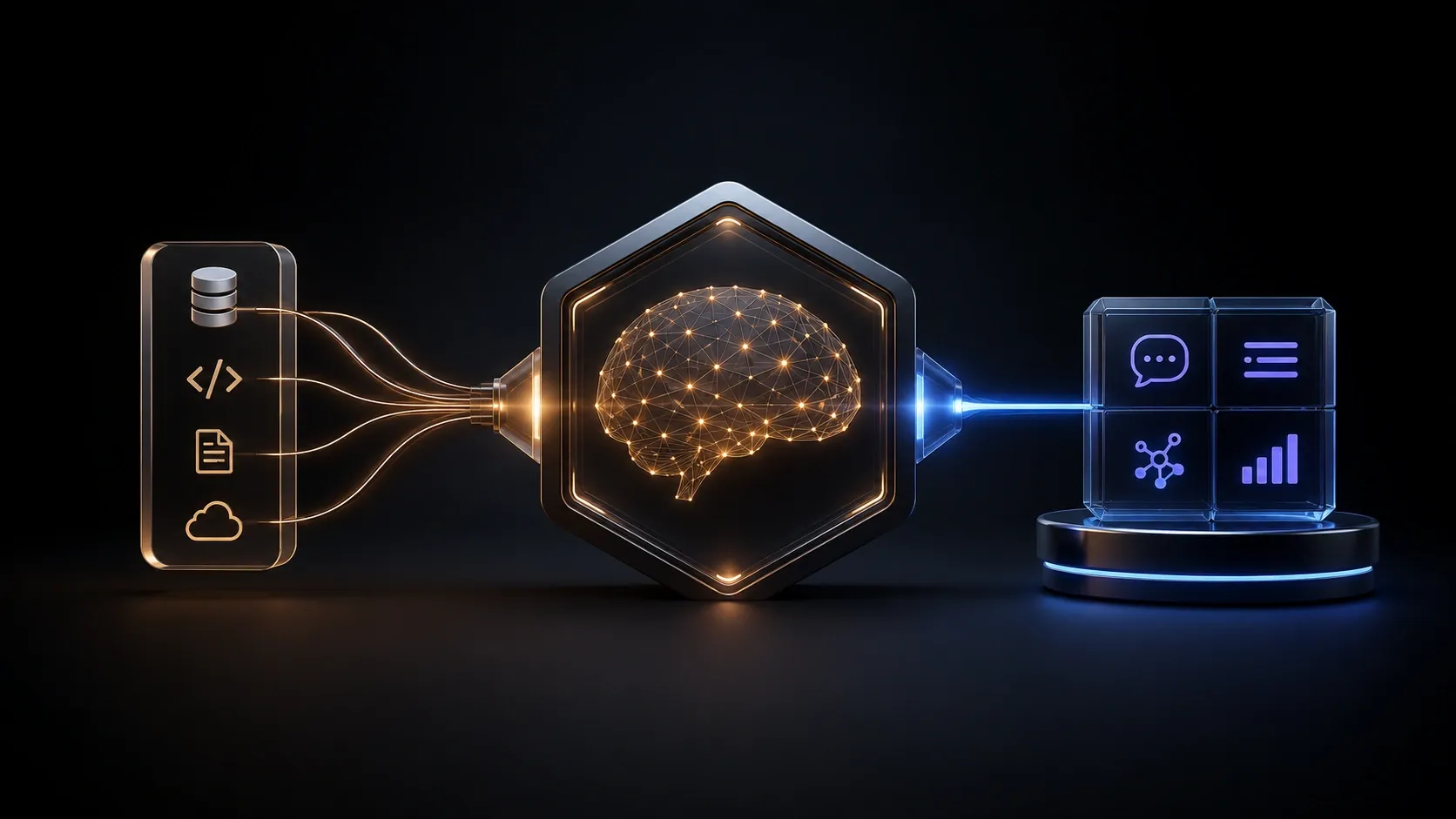
LLM Integration and Custom Model Development
Integrate large language models into your existing product, data stack, and engineering workflow. Ancilar handles model selection, API integration, prompt architecture, context management, and end-to-end testing. Supports OpenAI, Anthropic Claude, Google Gemini, Meta LLaMA, Mistral, and open-source models on your own infrastructure.
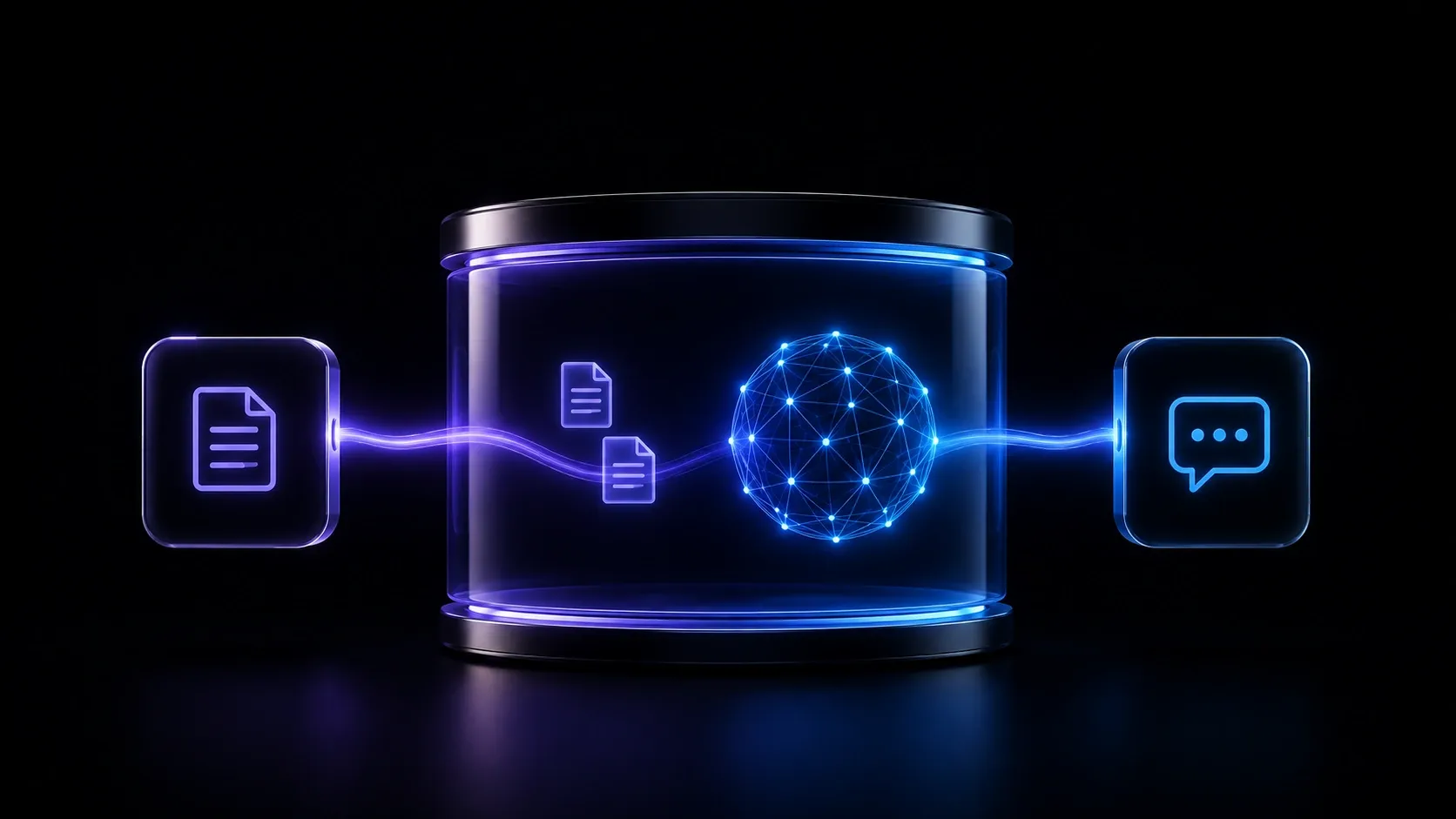
RAG System Development
Retrieval-Augmented Generation systems that give your AI accurate, grounded answers from your own data. Ancilar architects the full pipeline: document ingestion, chunking strategy, embedding models, vector store selection (Pinecone, Weaviate, Qdrant, pgvector), hybrid search, and reranking. Built for knowledge bases, internal tools, and customer-facing AI products.
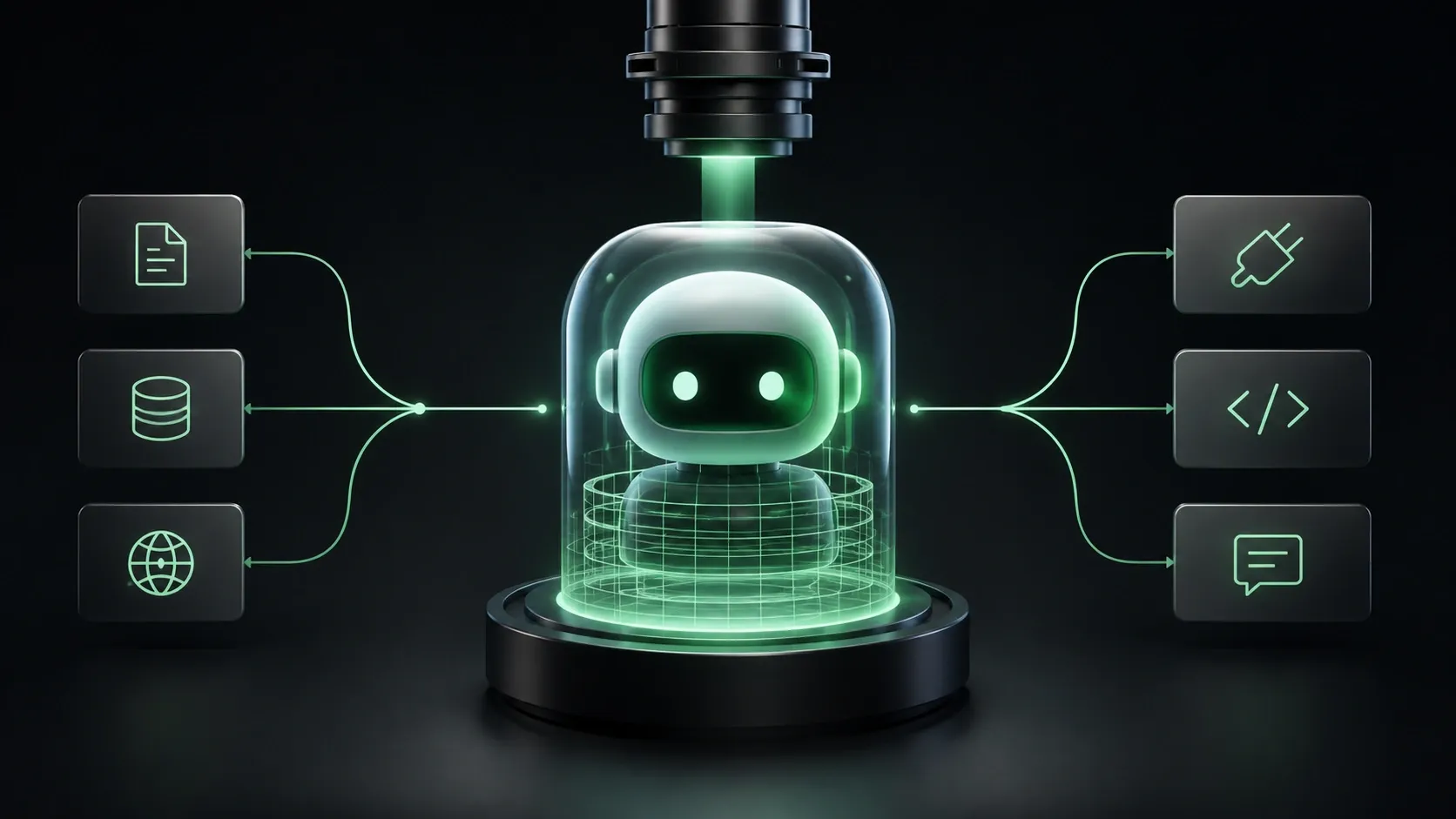
AI Agent Development
Autonomous agents that plan, reason, and act across tools, APIs, and data sources without continuous human input. Ancilar builds single-agent and multi-agent systems using LangGraph, CrewAI, AutoGen, and custom orchestration layers. Use cases include research automation, code generation pipelines, customer support agents, and on-chain AI execution.
AI Chatbot Development for Business
AI systems that operate natively within Web3 environments, reading on-chain state, responding to smart contract events, and executing transactions autonomously. Ancilar builds AI agents for DeFi automation, on-chain analytics, NFT generation pipelines, DAO tooling, and wallet intelligence. Built at the intersection of Ancilar's AI and blockchain engineering capability.
NLP and Text Intelligence Systems
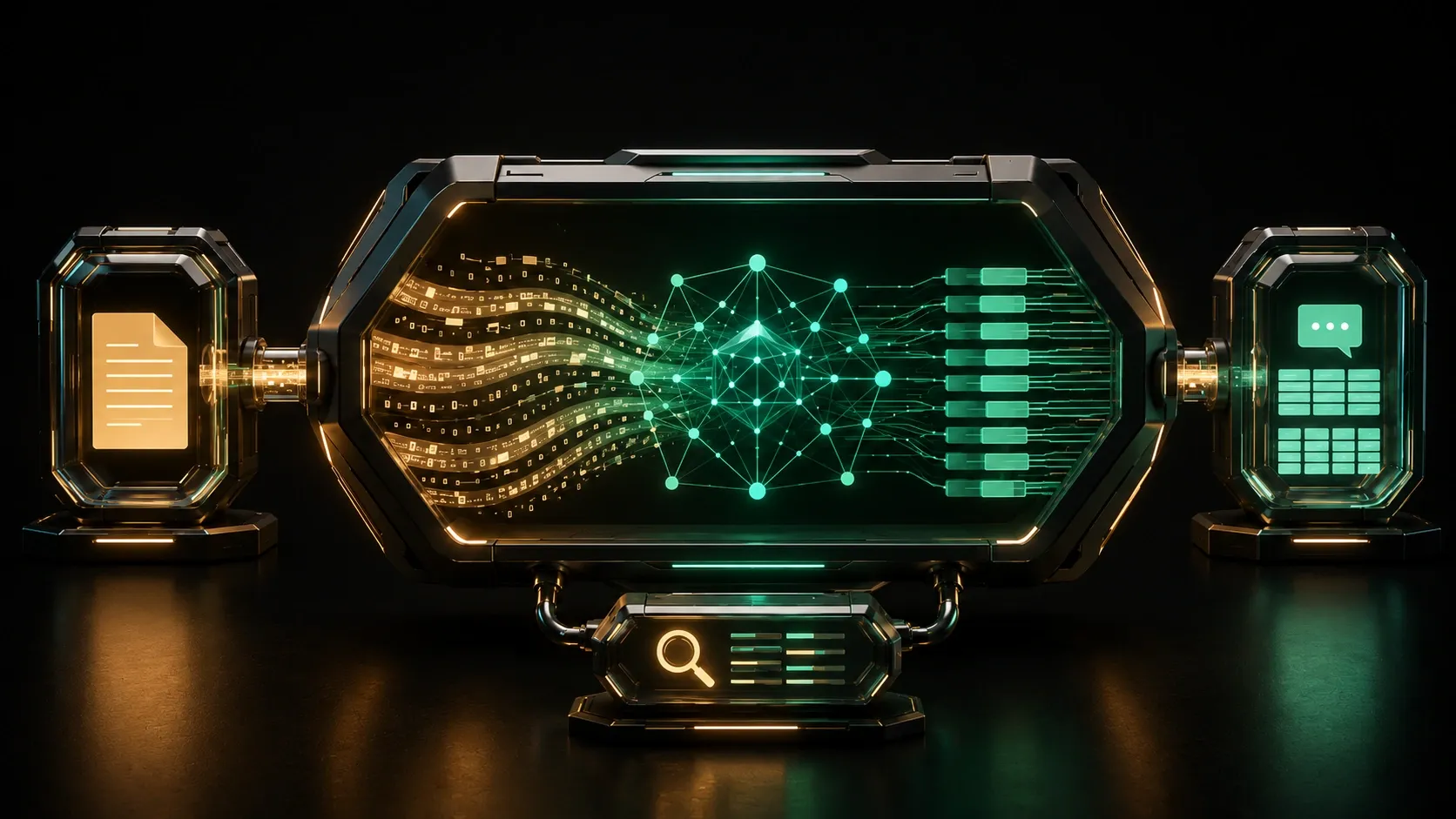
Natural language processing systems for classification, extraction, summarization, semantic search, and domain-specific fine-tuning. Ancilar builds NLP pipelines for document processing, contract analysis, customer communication, content generation, and structured data extraction from unstructured sources.
AI Evaluation, MLOps, and Production Support
Evaluation harnesses, deployment infrastructure, and ongoing support for AI systems in production. Ancilar builds benchmark frameworks, cost guardrails, latency monitoring, and regression pipelines. For teams hitting quality, cost, or performance ceilings after an initial AI launch.
How Ancilar Delivers AI Development Projects
Most AI delivery failures trace back to skipped architecture decisions at the start, not weak models at the end.
Discovery and Scope Definition
Define the use case, data sources, latency requirements, and integration points before any build begins.
Architecture Design
Select model, retrieval layer, orchestration framework, and evaluation strategy. Delivered as a technical specification.
Development and Integration
Build against the approved architecture. Covers LLM integration, retrieval pipeline, agent orchestration, and API design.
Evaluation and Testing
Accuracy benchmarking, latency profiling, hallucination testing, and cost measurement before deployment.
Deployment and Optimization
Production deployment with monitoring in place and iterative optimization as the system scales.
What Separates Production AI from Proof of Concept
A demo that impresses and a system that runs under real load are not the same thing. Our delivery methodology emphasizes:
Architecture Before Code
Retrieval design and orchestration layer defined before development starts, not retrofitted after demos break.
Evaluation as a Deliverable
Every system ships with a benchmark harness and measurable quality criteria, not a subjective impression.
Web3-Native AI Capability
AI systems built to operate on-chain alongside smart contracts, not bolted on from the outside.
Full-Stack Ownership
Same team from architecture through post-launch optimization. No handoffs between design and build.
The objective is an AI system that works reliably in production, not one that required a controlled demo to look good.
Who AI Development Services Are For
We see the strongest fit with:
Product companies adding AI features to existing Web or mobile applications
Web3 protocols and DeFi platforms building on-chain AI automation or analytics
Enterprises replacing manual document, data, or support workflows with AI
Startups building AI-native products who need a technical delivery partner
Companies with AI pilots that did not survive contact with production data
Teams needing AI engineering depth without hiring permanently
Most AI projects stall between the demo and production. That gap is an engineering problem.
Why Choose Ancilar for AI Development
Most AI projects fail not because the model was wrong, but because the system around it was not built for production. Teams work with us because:
AI systems designed for production constraints from the first architecture decision
Native Web3 capability to build AI operating on-chain alongside smart contracts
Full ownership from spec to deployment, no handoffs between vendors
Deep blockchain engineering background makes Web3 AI integrations native, not bolted on
Post-launch optimization included, not sold separately
The hardest part is not picking a model. It is building the system that makes it useful.
Engagement Models for AI Development
Depending on scope and stage, AI engagements typically include:
Fixed-scope project delivery for defined AI systems with clear requirements
Embedded AI engineering for companies building AI as an ongoing product priority
Proof-of-concept to production: scoped sprint to validate architecture, followed by full build
Production rescue for AI systems built but not performing reliably at scale
MLOps and evaluation infrastructure for teams with deployed AI that lacks monitoring or quality measurement
Multi-system AI build spanning LLM integration, RAG, and agent layers delivered as a unified engagement
A scoping call usually identifies where the real engineering challenge lives.
Common Questions About AI Engineering Services
Ancilar builds LLM integrations, RAG systems, AI agents and multi-agent workflows, NLP pipelines, on-chain AI systems, and MLOps infrastructure. Every system is engineered to run reliably under real user load, not just in a demo environment.
Ancilar works across OpenAI (GPT-4o, o1), Anthropic Claude, Google Gemini, Meta LLaMA, Mistral, and open-source models. Frameworks include LangChain, LangGraph, CrewAI, AutoGen, LlamaIndex, and custom orchestration where frameworks add unnecessary overhead.
Two things: production engineering discipline and native Web3 capability. Most AI agencies build demos. Ancilar designs for production constraints from the first architecture decision, and can build AI systems operating natively on-chain - which no general AI agency can credibly deliver.
Yes. Ancilar builds AI agents that read on-chain state, respond to smart contract events, and execute transactions autonomously. This is a native capability built on Ancilar's combined AI and blockchain engineering background.
Retrieval-Augmented Generation lets an LLM answer accurately from your own data without hallucination. If your AI needs to give reliable answers from internal documents, knowledge bases, or product data, RAG is the right foundation. Without it, the model answers from training data, which is rarely sufficient.
Yes. Ancilar takes on production rescue engagements for AI systems that are not performing reliably. This starts with an architecture review to identify where the system is failing, followed by a scoped rebuild or optimization program.
A well-defined RAG system or LLM integration typically takes four to eight weeks from architecture to production deployment. AI agent systems with complex orchestration take eight to fourteen weeks. A scoping call gives a more accurate estimate based on your data environment and integration complexity.
Yes. Ancilar provides post-launch support covering performance monitoring, quality evaluation, cost optimization, and iterative improvements under a defined support engagement.
Ready to Build an AI System That Works in Production?
A short conversation with Ancilar's AI engineering team is usually enough to:
- •Identify whether your use case needs LLM integration, RAG, agents, or a combination
- •Define the right architecture before any development cost is committed
- •Get a realistic timeline and delivery model for your specific AI project
- •Confirm whether existing infrastructure can be salvaged or needs to be rebuilt