L2 Rollup Benchmarks for AI Agent Workloads in 2026
Table of Contents
Table of Contents
Share
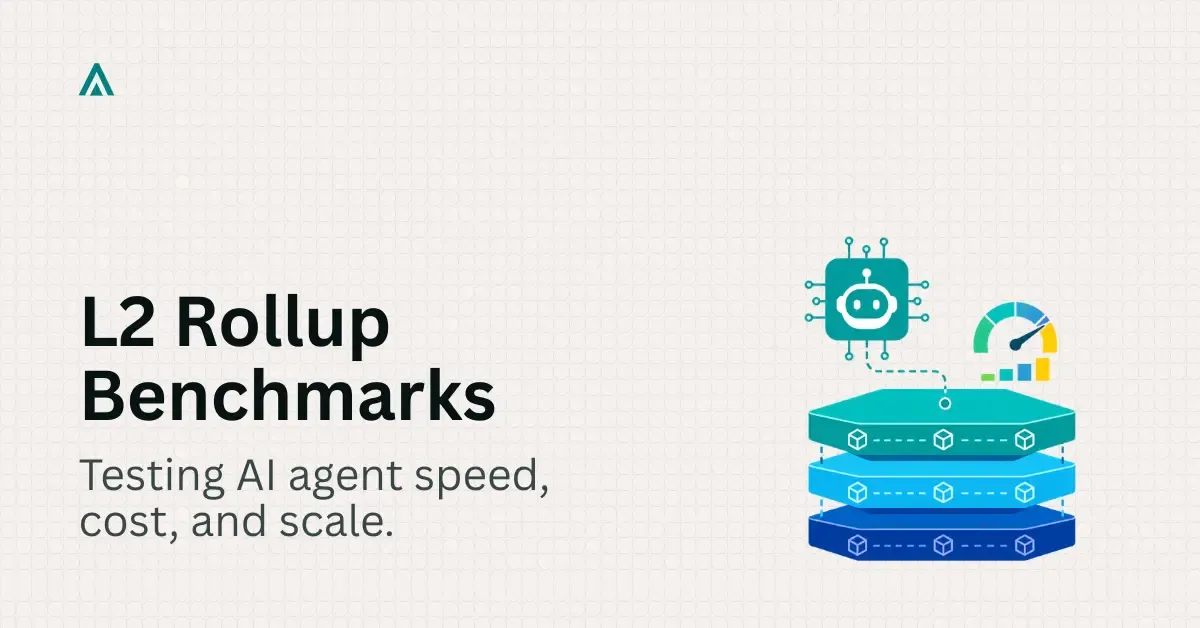
Optimism, Arbitrum, and Base benchmarks for AI agent workloads in 2026: gas, finality, throughput, and a 10-step deployment guide for business operators.
Frequently Asked Questions
- There is no single winner. Base offers the lowest median gas and the highest mid-2026 agent transaction share, Arbitrum offers the deepest DeFi liquidity for agent rebalancing, and Optimism offers the strongest interop story through the Superchain. Operators should pick by workload profile rather than by brand.
- Median transaction fees on Base, Optimism, and Arbitrum sit in the sub-cent to low-cent range in 2026 after EIP-4844 blobs. For an AI agent issuing hundreds of small transactions per day, this translates to a few dollars per agent per month at typical bursty workloads.
- Yes. Most operators ship a single-rollup agent MVP in 8 to 12 weeks, validate the unit economics, then expand to a second rollup once the cost model and risk controls are confirmed. Multi-rollup from day one rarely pays back inside the first year.
- An agent-pre-mainnet review typically covers signer key custody, transaction throttling, circuit breakers, oracle integration, contract upgrade paths, and rollup-specific quirks like sequencer downtime handling. Scope depends on agent autonomy level and total value under management.
- All three rollups still run centralised sequencers in 2026, so agents must tolerate brief sequencer outages without draining capital. Production agent code should include retry logic, mempool fallback to L1, and pause conditions that trigger when sequencer health degrades.
Don't Miss What's Next
Subscribe to newsletter
Tags:
Layer 2
AI Agents
Optimism
Arbitrum
Base
Operator Guide
Get in Touch
Our team will get back to you within 24 hours.