L2 Token Economics: Sequencer Fees Investment Brief
Table of Contents
Table of Contents
Share
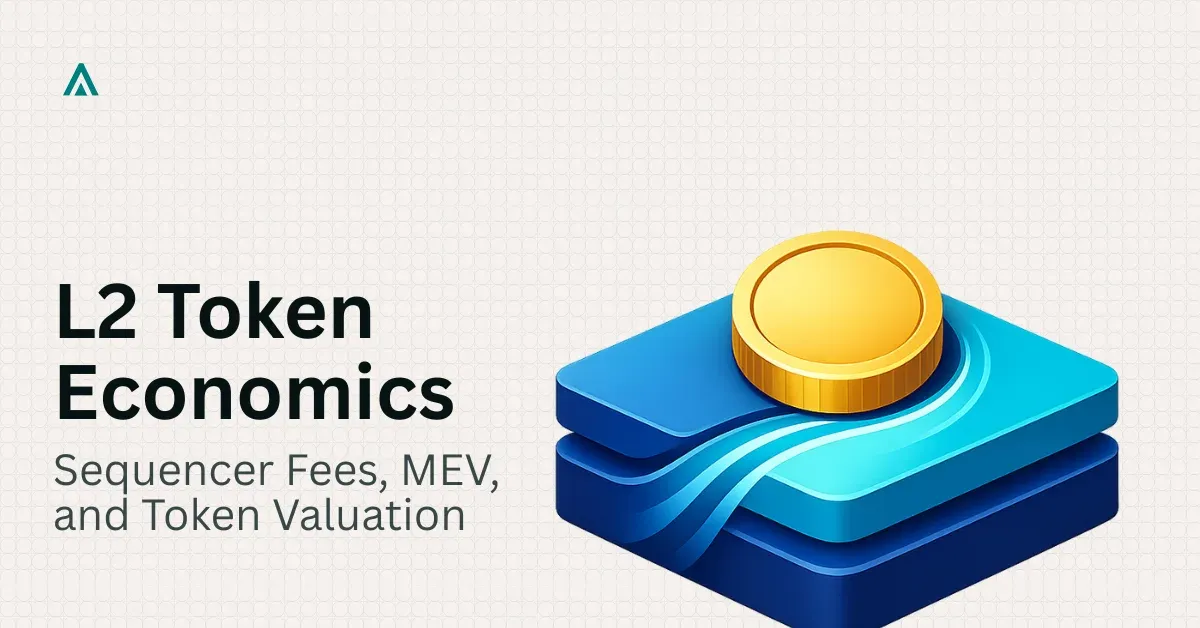
L2 token economics brief, January 2024: audit sequencer fee mechanics and verify where revenue accrues before allocating capital to Arbitrum or Optimism.
Frequently Asked Questions
- Not directly. ARB is a governance token: Arbitrum sequencer fee surplus flows to the Arbitrum DAO treasury, which holders vote to allocate through proposals, but there is no automatic dividend or buyback tied to token ownership. OP works similarly, with sequencer revenue directed toward the Optimism Collective's public goods funding rather than paid to OP holders. As of January 2024 neither token carries a direct cash-flow claim on sequencer economics.
- A rollup sequencer charges users an execution fee, priced like standard Ethereum gas, plus an L1 data fee that recovers the cost of posting compressed transaction batches back to Ethereum as calldata. Arbitrum pools L1 fee collections in a dedicated account and reimburses the batch poster for actual posting cost, adjusting the parent chain gas price to stay near break-even. Optimism's Bedrock-era formula sums execution gas cost and an L1 data fee calculated from transaction byte count and the Ethereum base fee.
- Ethereum Layer 2 total value locked crossed roughly 13 billion dollars in Q4 2023, concentrated in Arbitrum and Optimism, yet neither governance token converts that usage into a direct revenue claim. An allocator sizing exposure to L2 tokens is underwriting governance control over a treasury and a public goods budget, not a cash-flow instrument, which changes both the valuation model and the diligence checklist before capital commits.
Don't Miss What's Next
Subscribe to newsletter
Tags:
Layer 2
Token Economics
Sequencer Revenue
Get in Touch
Our team will get back to you within 24 hours.