Model Evaluation Explained: How It Works and Why It Matters in 2026
Table of Contents
Table of Contents
Share
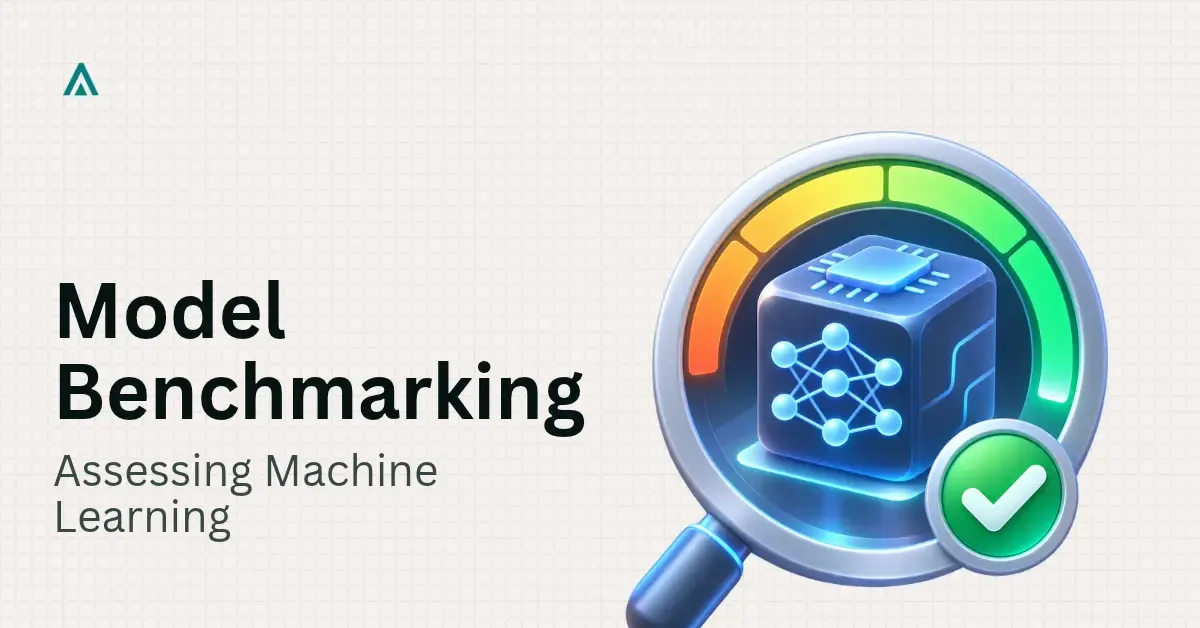
Model evaluation: AI systems solved 4.4% of SWE-bench problems in 2023 and 71.7% in 2024. Size your own test set, then verify each vendor score and margin.
Frequently Asked Questions
- Model evaluation is testing a trained model on data it has not seen, with a metric that reflects what errors cost the business. Offline evaluation happens before launch on stored, labelled examples; online evaluation follows the live outcome after launch. A sound report states the sample size and margin of error beside every score.
- Large enough to resolve the smallest score gap that would change your decision. By standard sampling arithmetic, a five-hundred-question test at ninety percent accuracy carries a margin of a little over two and a half points either way at ninety-five percent confidence, and resolving one point takes roughly three and a half thousand independent questions.
- For high-risk AI systems, yes. Article 9 requires providers to test them before they are placed on the market, against prior defined metrics and probabilistic thresholds, and Article 15 requires accuracy levels and metrics to be declared in the instructions of use. After the Digital Omnibus amendments these duties apply from 2 December 2027 for Annex III systems and 2 August 2028 for Annex I systems.
Don't Miss What's Next
Subscribe to newsletter
Tags:
model evaluation
evaluation margin of error
benchmark contamination
model drift
market intelligence
Get in Touch
Our team will get back to you within 24 hours.