Solana DeFi: High-Throughput AMM Economics in 2024
Table of Contents
Table of Contents
Share
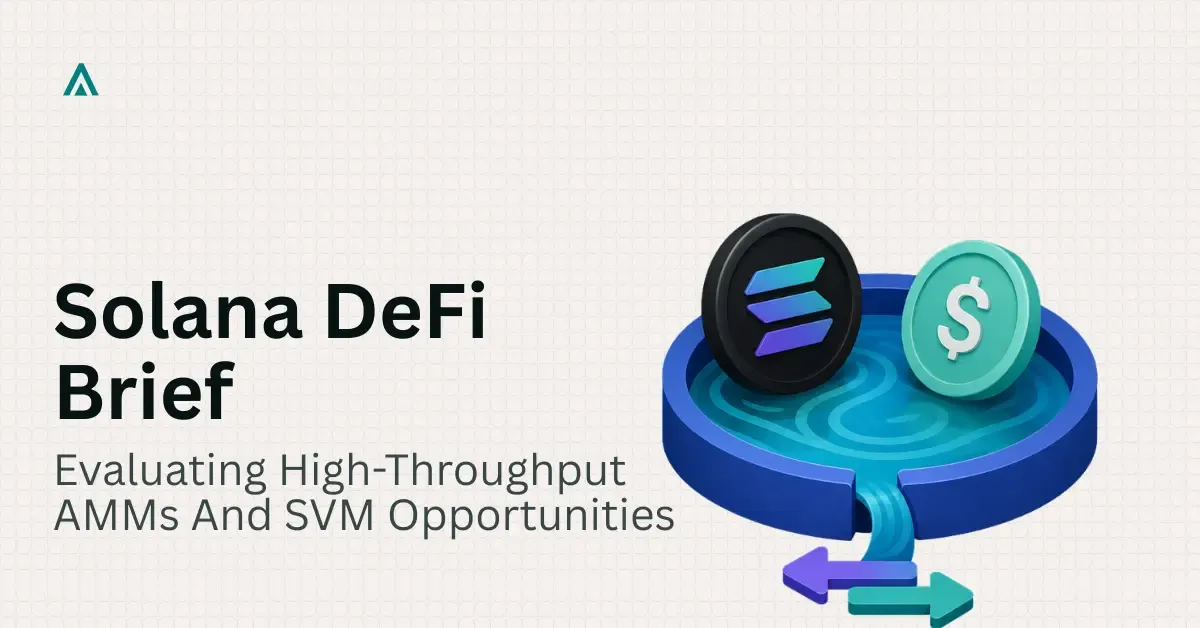
Jupiter settled $500M+ in 24-hour volume ahead of its JUP airdrop. Review the SVM's parallel-execution AMM economics before allocating to Solana DeFi in 2024.
Frequently Asked Questions
- The SVM is Solana's execution environment. It processes non-overlapping transactions in parallel through a scheduling model called Sealevel, rather than executing one transaction at a time as most virtual machines do. For allocators, the practical effect is an automated market maker that can settle high trading volume without the fee spikes seen on slower networks.
- Solana DeFi carries the same smart contract and liquidity risk as any on-chain venue, and the network has an outage history worth underwriting into any allocation. Aggregators like Jupiter routing over half a billion dollars in 24-hour volume ahead of its January 2024 token launch signal real trading depth, but allocators should size positions against audited protocols and diversify execution venues rather than concentrate on a single chain.
- Solana's parallel transaction processing keeps swap fees near-flat during volume spikes, while Ethereum-based automated market makers like Uniswap v3 depend on Layer 2 rollups to control gas cost during congestion. Both models settle billions in monthly volume, but the cost structure and settlement speed differ materially, which matters for allocators comparing infrastructure economics rather than token price.
Don't Miss What's Next
Subscribe to newsletter
Tags:
Solana
DeFi
AMM
SVM
Capital Allocation
Get in Touch
Our team will get back to you within 24 hours.