6 Contract Decisions That Make a Token Hard to Trade (That Nobody Warns You About)
Table of Contents
Table of Contents
Share
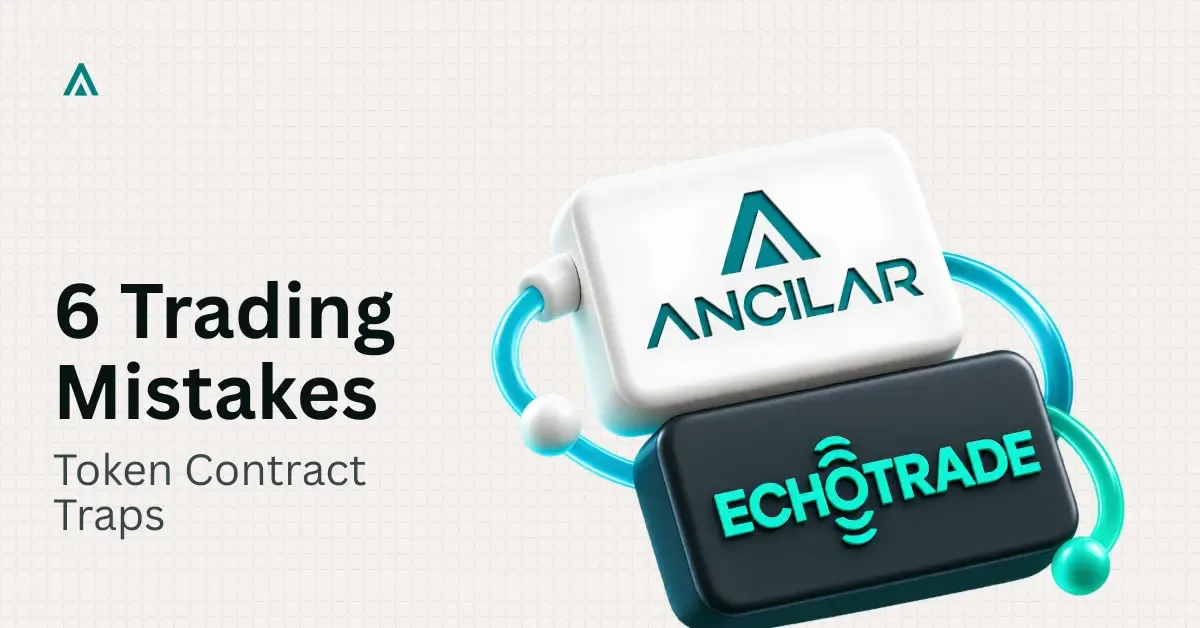
Six contract decisions that make a token hard to trade: total supply, pool fee tier, max wallet caps, cooldowns, chain finality and gas cost per transfer.
Frequently Asked Questions
- There's no universal answer, but there is a method. Work backwards from the unit price you expect to trade at, then check the minimum tick size your target venues use in that range. A token priced far below the venue's smallest increment has a spread that can't be tight in percentage terms, however much depth is resting in the book.
- Usually yes, and more than teams expect. A max wallet cap applies to exchange hot wallets and Market Maker inventory as well as to whales. A cap low enough to matter is normally low enough to break deposit sweeps, or to force inventory across several addresses. The setting that deters bots and the setting that blocks a working book aren't always the same number, but they're close enough that the trade-off has to be deliberate.
- Because depth doesn't move between exchanges by itself. Rebalancing across venues takes as long as the chain takes to settle, and capital in transit isn't resting in a book. Slower settlement means either more capital committed per venue or less depth quoted on each. It also means price gaps between venues stay open longer.
- Caps and cooldowns can, if the contract allows it and the keys still exist. A pool fee tier can be worked around by deploying a new pool and migrating liquidity, at the cost of splitting it during the move. Total supply, decimals and chain can't change without a migration, which means asking every holder and every integration to move with you.
- The settings themselves rarely are. What gets flagged is the admin role behind caps, cooldowns and launch gating, because a key that can exempt addresses or switch trading on and off is centralization risk. Any contract that does math on the token still gets its rounding tested at the edges of the price range it will trade in.
- Before the code freezes for audit, ideally in the same weeks the tokenomics are drafted, because supply, decimals, chain and pool tier can't change later without a migration or a new pool. Caps and cooldowns can be tuned closer to launch, but only if the ability to raise or remove them is already in the audited code.
Don't Miss What's Next
Subscribe to newsletter
Tags:
token launch
market making
token contract design
liquidity
Get in Touch
Our team will get back to you within 24 hours.