Real Estate Tokenization: What the Data Says in 2026
Table of Contents
Table of Contents
Share
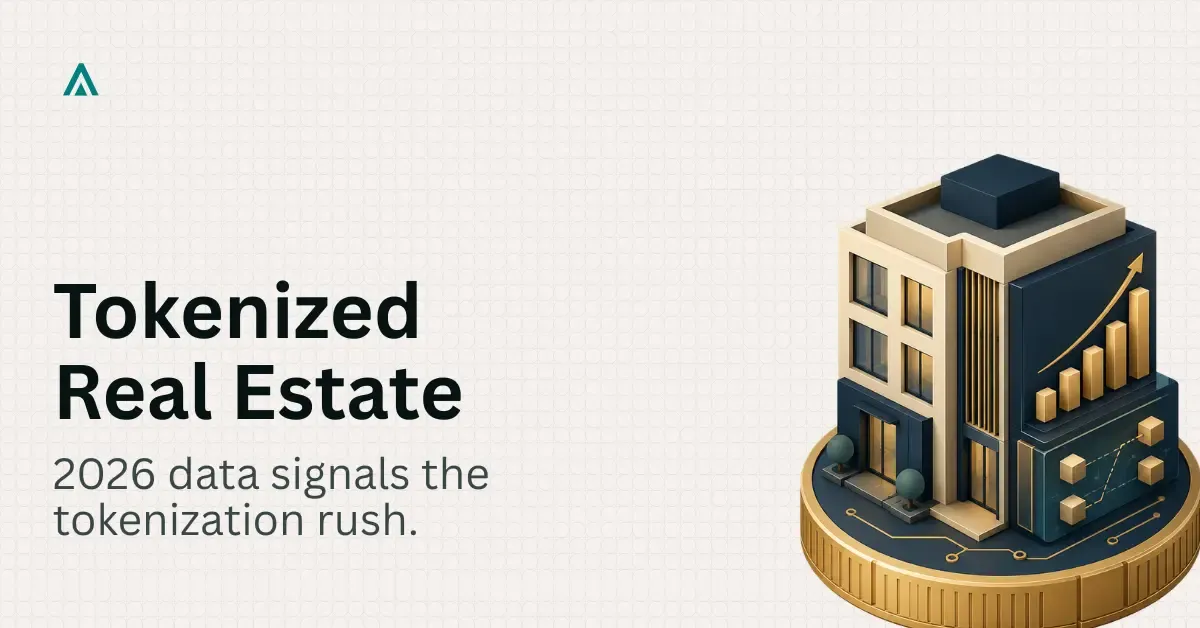
Real estate tokenization is reshaping property investment in 2026. Review live market data, platform evaluation steps, legal frameworks, and founder insights.
Frequently Asked Questions
- Real estate tokenization converts ownership rights in a property into digital tokens on a blockchain. Each token represents a fractional share of equity or income rights in the underlying asset, held through a legal entity such as an SPV. Investors buy tokens through a compliant onboarding process and can potentially trade them on secondary markets. The core benefit is that it lowers minimum investment thresholds and can speed up settlement compared to traditional property transactions.
- Yes, real estate tokenization is legal in the United States, but the tokens are treated as securities and must comply with SEC regulations. Most platforms operate under Reg D exemptions, which limit participation to accredited investors. Platforms seeking to offer tokens to non-accredited investors must pursue Reg A+ qualification or a full registration. Working with securities counsel before issuance is mandatory, not optional.
- The cost varies based on asset size, jurisdiction, and whether you are building custom infrastructure or using an existing platform. A typical project covering legal structuring, smart contract development, security audit, and investor portal build runs into the six-figure range for a first issuance. Ongoing compliance, custody, and platform maintenance add recurring costs that must be factored into your fee structure from day one.
Don't Miss What's Next
Subscribe to newsletter
Tags:
real estate tokenization
RWA tokenization
property tokens
blockchain real estate
tokenized assets 2026
RWA
Get in Touch
Our team will get back to you within 24 hours.