Tokenized Treasuries: Capital Allocator's Guide to RWA Yield
Table of Contents
Table of Contents
Share
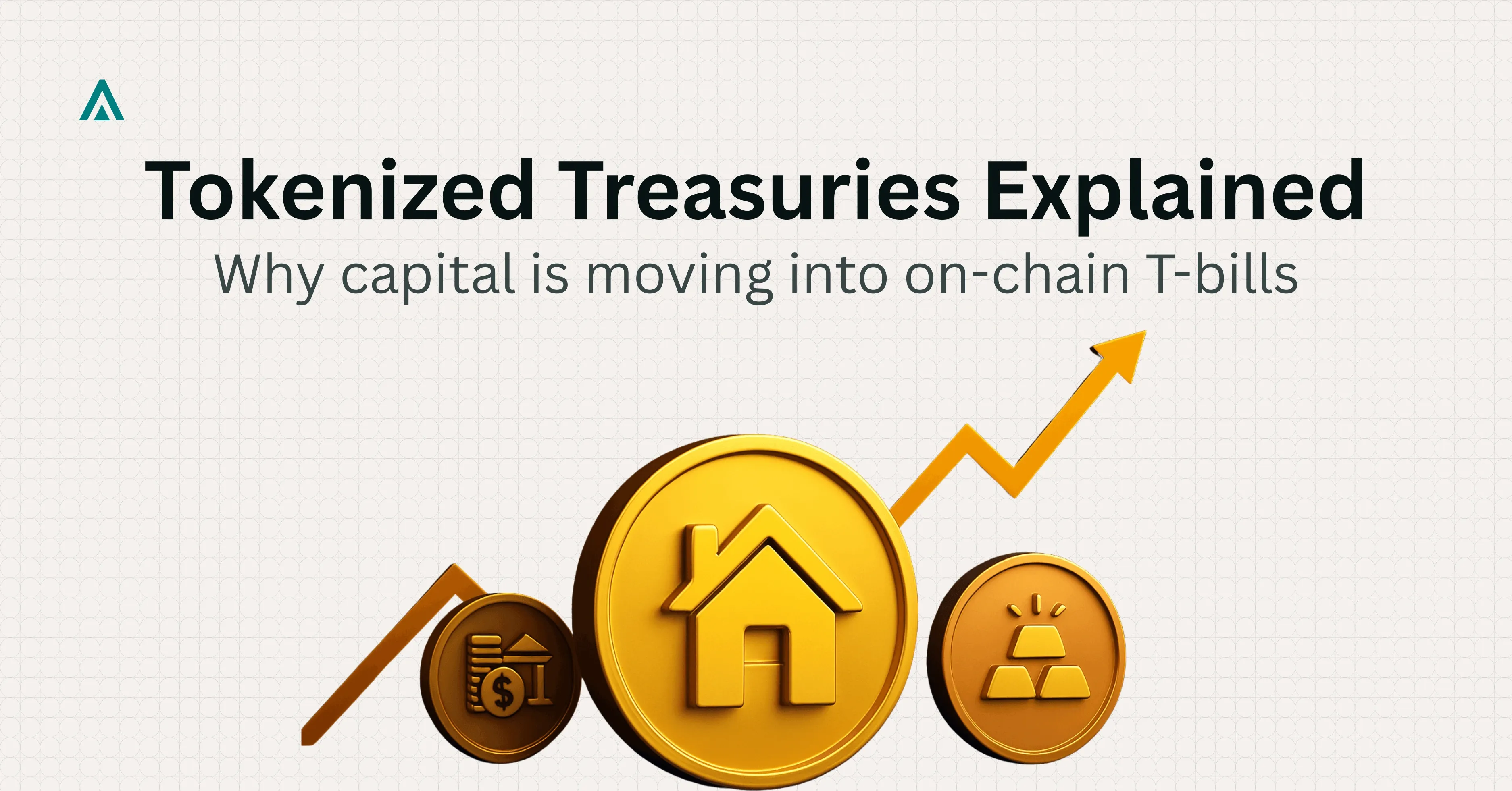
Tokenized U.S. Treasuries surpassed $7B on-chain by late 2025. This guide covers mechanics, compliance, and allocation frameworks for institutional investors.
Frequently Asked Questions
- A tokenized treasury is a blockchain-based digital token representing a proportional claim on one or more U.S. Treasury Bills held by a licensed custodian or Special Purpose Vehicle. Unlike a standard T-Bill purchased through a brokerage, the token settles on-chain in minutes, can be transferred peer-to-peer to whitelisted wallets, and distributes yield automatically via smart contract logic. The underlying T-Bill remains the same government-backed debt instrument, but the token wrapper adds programmability, composability with DeFi protocols, and 24/7 settlement capability.
- Yes. Leading tokenized treasury products operate under existing securities frameworks. BlackRock's BUIDL fund is issued under SEC Regulation D, restricting access to accredited investors, with $2.5B in AUM as of November 2025. Franklin Templeton's BENJI is a registered SEC money market fund, making it the first SEC-registered fund to record share ownership on a public blockchain. In the EU, tokenized securities must comply with the MiCA framework for asset-referenced tokens or qualify under the DLT Pilot Regime established by Regulation EU 2022/858. Allocators must verify the regulatory wrapper of any product before committing capital.
- The primary risks fall into four categories. First, smart contract risk: bugs in the token contract or custody bridge can result in loss of funds. Second, custodial and counterparty risk: the fiat T-Bills must be held by a regulated custodian, and insolvency of that custodian creates redemption risk. Third, liquidity risk: secondary market depth for tokenized treasuries varies significantly by product and can thin quickly in risk-off environments. Fourth, regulatory risk: jurisdiction-specific rules on digital securities may restrict transfer or impose compliance obligations that alter liquidity. Allocators should review audit reports, custodian insurance coverage, and redemption terms before committing capital.
Don't Miss What's Next
Subscribe to newsletter
Tags:
tokenized treasuries
real-world assets
rwa crypto
defi yield
treasury-backed tokens
RWA
Get in Touch
Our team will get back to you within 24 hours.