What Shipping Vertical AI Agents to SaaS Taught Us in 2026
Table of Contents
Table of Contents
Share
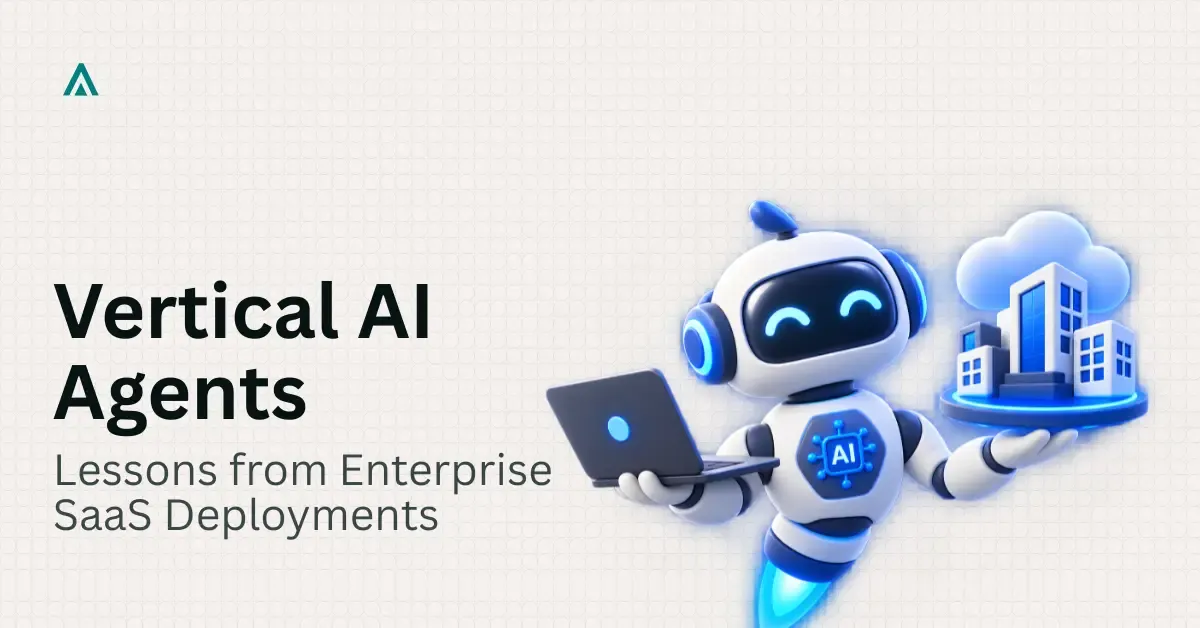
Neeraja Tokekar shares what shipping vertical AI agents into SaaS enterprises in 2026 taught Ancilar about pricing, retrieval, and scope. Read it first.
Frequently Asked Questions
- A vertical AI agent for a SaaS enterprise is a task-specific autonomous system built to complete one recurring workflow inside an existing enterprise software stack, such as ticket triage, renewal risk scoring, or usage-based provisioning, rather than a general-purpose assistant bolted onto a dashboard. It calls the vendor's own APIs, respects the customer's permission model, and produces an outcome a buyer can measure against a seat-based subscription it may be replacing.
- A chatbot answers a question inside one session and forgets it. A SaaS AI agent holds a task across multiple steps, calls internal and third-party tools such as billing, CRM, or a data warehouse, checks its own output against account-level policy before acting, and only pings a human when confidence drops below a threshold the SaaS vendor sets, not the AI vendor. The difference is persistence, tool access, and who owns the escalation rule.
- Product and engineering leaders at SaaS companies with a recurring, high-volume, low-ambiguity workflow already burning support or ops headcount are the strongest fit. Vendors already tracking seat cannibalization from outcome-based pricing, and willing to fund the metering and audit layer alongside the agent itself, see the fastest return, because that layer is what lets finance defend the new pricing model to the board.
Don't Miss What's Next
Subscribe to newsletter
Tags:
AI Agents
SaaS
Founder Perspectives
Enterprise AI
Founder Blog
Get in Touch
Our team will get back to you within 24 hours.