Retrieval-Augmented Generation Explained: How It Works and Why It Matters in 2026
Table of Contents
Table of Contents
Share
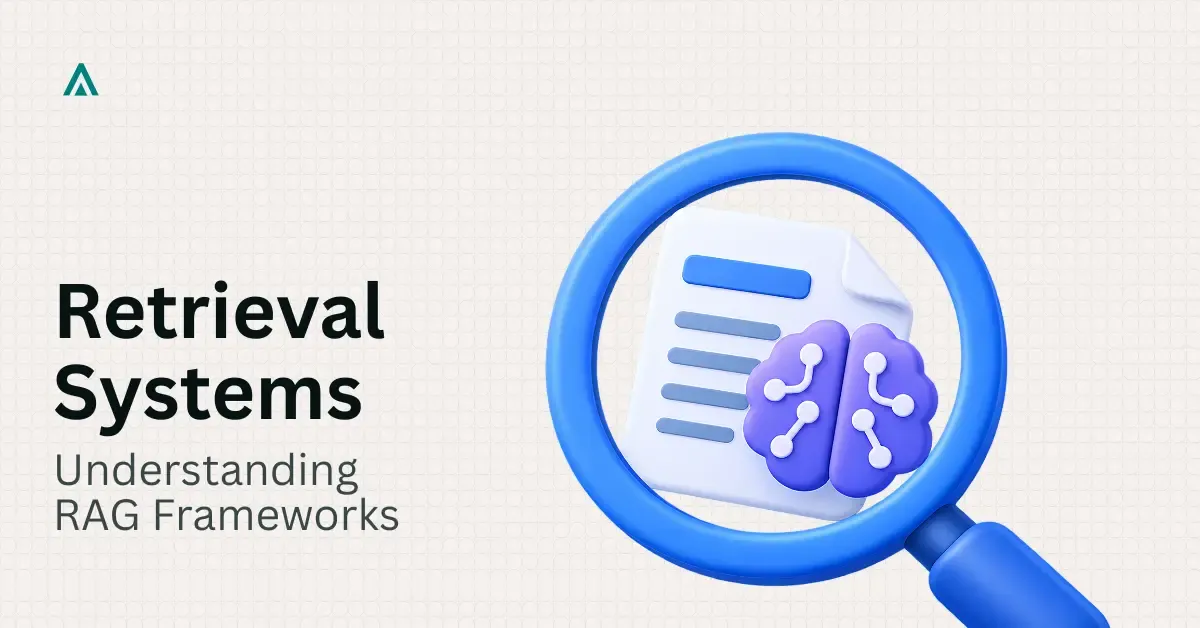
See how retrieval-augmented generation works in 2026, why retrieving fewer passages often beats retrieving more, and the build order I would follow today.
Frequently Asked Questions
- Retrieval-augmented generation is a pattern that fetches passages from your own content at question time and puts them into the model's prompt, so the answer is grounded in documents you control rather than in whatever the model memorised during training. The term comes from a 2020 paper by Lewis and colleagues, which combined a parametric language model with a searchable index of passages. In business terms it means your assistant can answer from this morning's price list, and you can show which document produced each sentence.
- For facts that change, retrieval wins, because updating an index takes minutes and retraining does not. Fine-tuning is the better tool for format, tone and task behaviour, where you want the model to respond in a fixed shape every time. Most production systems I see end up using both: retrieval for the facts, a small amount of tuning or careful prompting for the shape of the answer. Choosing one and declaring the other unnecessary is where teams waste a quarter.
- Not past a point, and this is the finding founders most often miss. Research on long-context behaviour shows accuracy is often highest when the relevant passage sits at the beginning or the end of the input and degrades significantly when the model has to use information buried in the middle. Raising the number of retrieved passages pushes good evidence into that weak middle zone while also raising the token bill. Retrieving fewer passages and ranking them harder usually improves accuracy and cost at the same time.
Don't Miss What's Next
Subscribe to newsletter
Tags:
Retrieval-Augmented Generation
RAG
Founder Perspectives
Enterprise AI
Vector Search
EU AI Act
Get in Touch
Our team will get back to you within 24 hours.