MEV Protection: The Commit-Reveal Investment Brief
Table of Contents
Table of Contents
Share
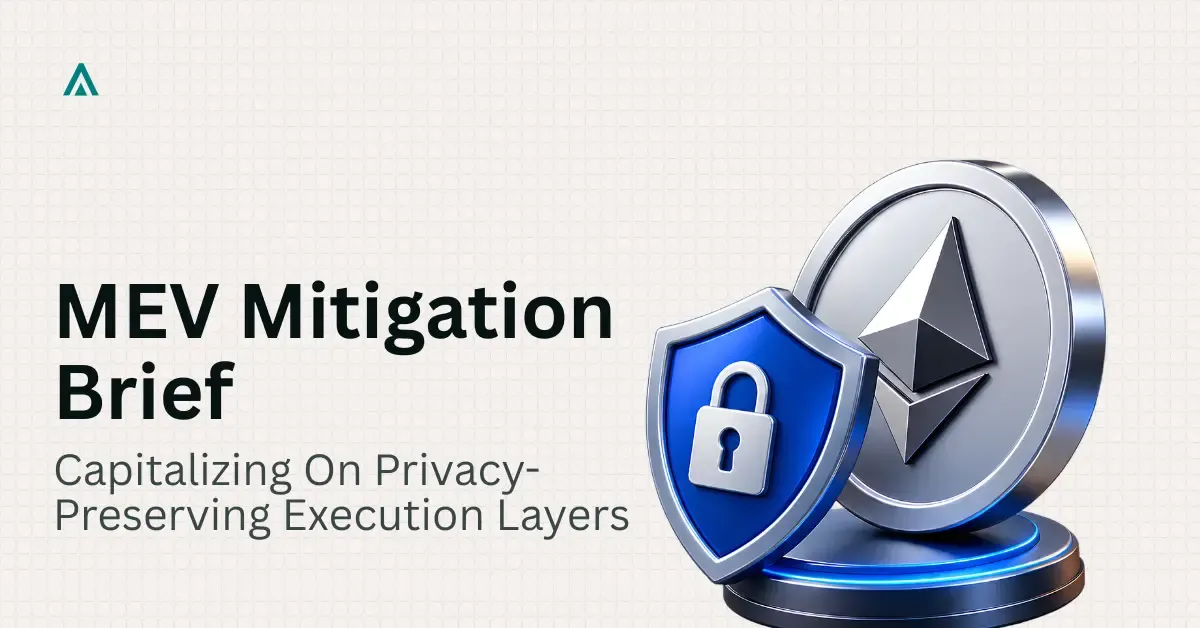
MEV bots extracted over $1.38 billion from Ethereum users by early 2023. Review commit-reveal and anti-sandwich infrastructure before you allocate capital.
Frequently Asked Questions
- MEV protection infrastructure is a category of software and network middleware that stops third parties from reordering, inserting, or censoring a transaction before it settles. It includes private order-flow relays, encrypted mempools, batch auctions, and commit-reveal schemes. Capital allocators back it because every DeFi protocol with an on-chain order book bleeds value to sandwich attacks and front-running unless one of these mechanisms sits in the execution path.
- A commit-reveal scheme hides the transaction content itself: a trader submits a cryptographic hash first and reveals the real order parameters only after it is locked into sequence, so no one can see if the trade is profitable to attack. A private relay instead hides the transaction from the public mempool entirely, routing it directly to a trusted builder. Relays remove the extraction opportunity by removing visibility before block inclusion; commit-reveal removes it by removing visibility during ordering.
- It is a lower-risk entry point than most DeFi infrastructure because the buyer base is compulsory rather than optional. Any protocol processing retail swap volume needs sandwich protection to remain competitive, which gives MEV protection vendors recurring, protocol-level demand rather than speculative retail attention. The main risk is technical: encrypted mempools and trusted-execution designs are still maturing, so allocators should weight audited, production-deployed solutions over unaudited experimental ones.
Don't Miss What's Next
Subscribe to newsletter
Tags:
MEV protection
commit-reveal
sandwich attacks
DeFi infrastructure
capital allocation
DeFi
Get in Touch
Our team will get back to you within 24 hours.