Architecting Stablecoin Rails: Smart Contract Patterns 2026
Table of Contents
Table of Contents
Share
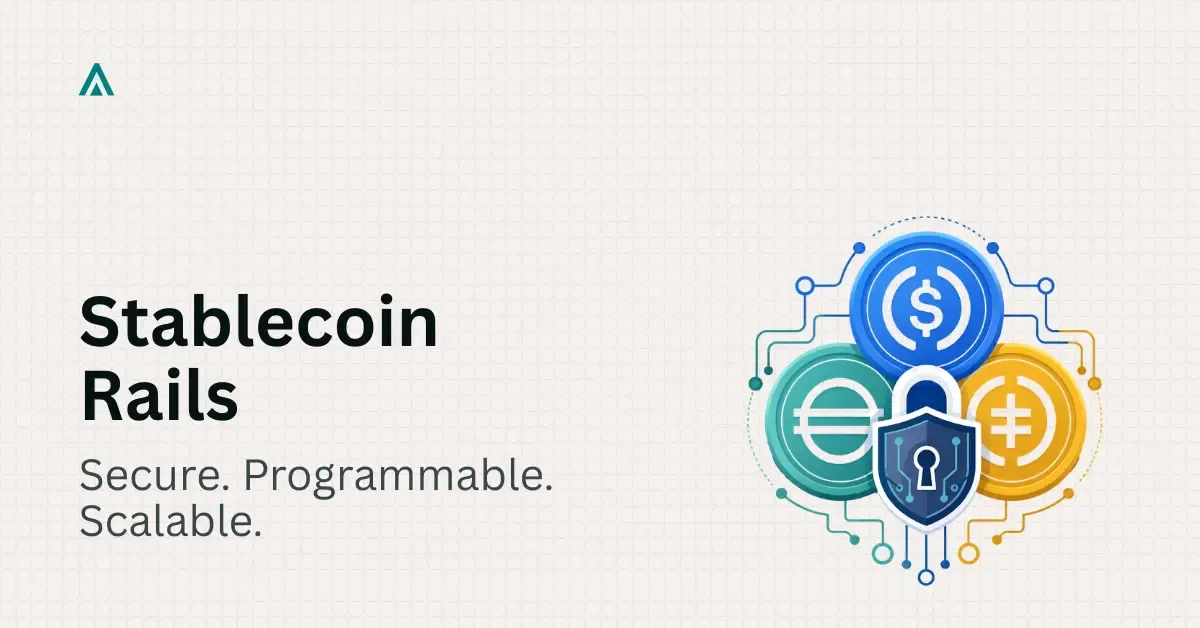
Build stablecoin rails for neo-banking in 2026: GENIUS Act freeze and allowlist patterns, EIP-2612 permit, ERC-4337 sponsorship, MiCA, and a full build guide
Frequently Asked Questions
- Stablecoin rails are the on-chain smart contracts and off-chain services a neo-bank uses to issue, transfer, freeze, and settle a fully reserved payment stablecoin. They combine an ERC-20 token, a compliance layer with allowlist and blocklist and freeze roles, a permit signature path, and a sponsorship layer so users transact without holding native gas tokens.
- Yes. The GENIUS Act, signed into law on July 18, 2025, requires that all payment stablecoin issuers possess the technical capability to seize, freeze, or burn stablecoins when legally required. In practice that means the token contract must expose role-gated freeze, blacklist, and burn functions controlled by an authorised compliance role.
- EIP-2612 adds a permit function that lets a user approve token spending through an EIP-712 signed message instead of a separate on-chain approve transaction. For a neo-bank this collapses a two-transaction flow into one, removes the need for the user to hold gas for the approval step, and lets a relayer or paymaster submit the transfer on the user's behalf.
Don't Miss What's Next
Subscribe to newsletter
Tags:
Stablecoins
Smart Contracts
Neo-Banking
GENIUS Act
MiCA
Technical Deep Dive
Get in Touch
Our team will get back to you within 24 hours.