Governor Bravo vs OpenZeppelin Governor Architecture
Table of Contents
Table of Contents
Share
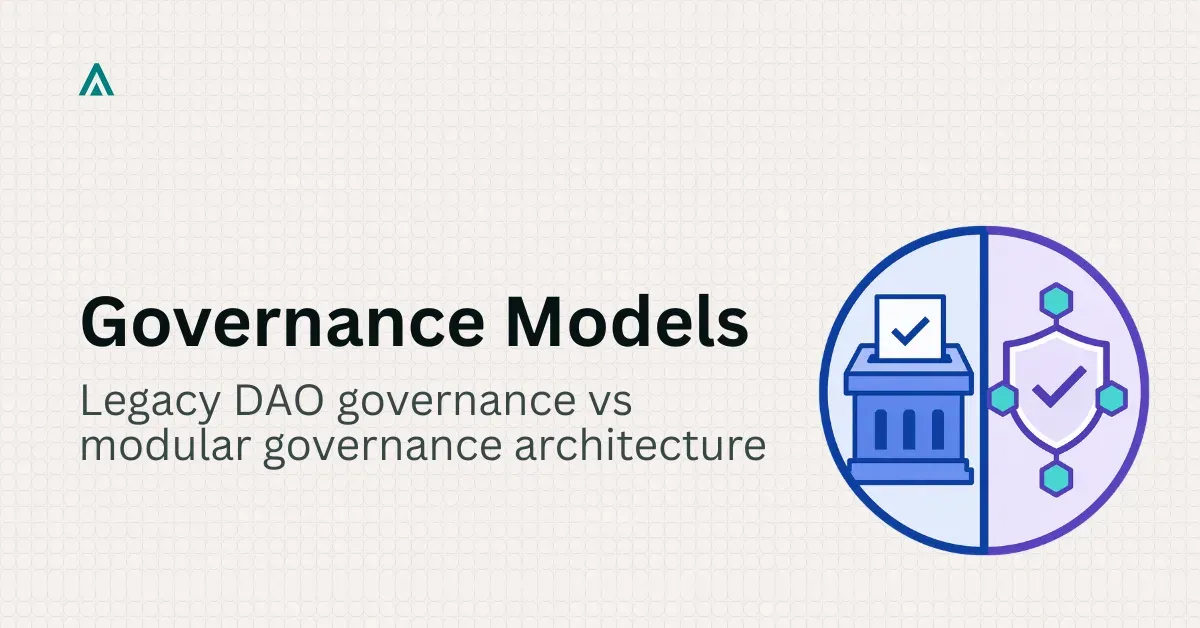
Governor Bravo vs OpenZeppelin: 2 on-chain frameworks for 2024 DAOs. Build or audit proposals, timelocks, and governance upgrades with the right design.
Frequently Asked Questions
- Governor Bravo is Compound's governance contract, an upgradeable successor to GovernorAlpha deployed behind a delegator proxy so its logic can change without migrating state. OpenZeppelin Governor is a modular framework that achieves the same governance lifecycle through Solidity inheritance rather than a monolithic contract, and it ships a GovernorCompatibilityBravo module for Bravo-style interfaces. Bravo is a specific battle-tested deployment, while OpenZeppelin Governor is a configurable system you compose from modules.
- A proposal is created with propose, then enters a voting delay before voting opens. Token holders cast votes across a voting period, and if the proposal reaches quorum and passes, it moves to queue, which schedules it in a timelock contract. After the timelock delay elapses, execute runs the proposal's calls. The timelock holds the governed assets and enforces the delay, giving the community a window to react before any change takes effect.
- A timelock inserts a mandatory delay between a proposal passing and its execution, so the contract that holds and moves the governed assets only acts after that delay. This window lets token holders who disagree with a passed proposal exit or organise before it takes effect, which is the main defence against a malicious or rushed proposal. Both Governor Bravo and OpenZeppelin Governor execute through an external timelock for this reason.
Don't Miss What's Next
Subscribe to newsletter
Tags:
DAO Governance
Smart Contract Architecture
Solidity
Smart Contracts
Get in Touch
Our team will get back to you within 24 hours.