Smart Contract Audit Playbook for Tier-1 Security Review
Table of Contents
Table of Contents
Share
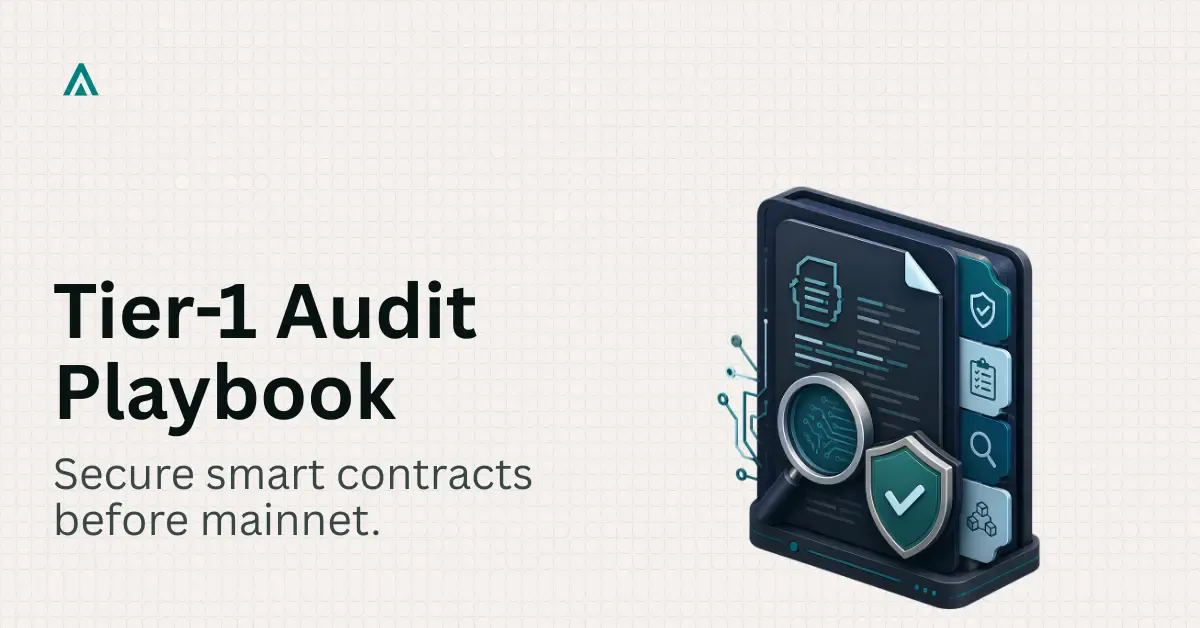
Prepare your smart contract for a Tier-1 security audit. $3.4B lost in 2025 proves preparation matters. Learn what auditors check and how to cut audit costs.
Frequently Asked Questions
- A Tier-1 smart contract audit typically costs between fifteen thousand and eighty thousand US dollars, depending on codebase size, complexity, and the number of protocol interactions involved. Some top-tier firms charge above that range for very large codebases or formal verification work. The cost of an audit is a fraction of the cost of a successful exploit.
- Most Tier-1 audits run four to eight weeks from kickoff to final report. This window covers initial scoping, active review, remediation, and a re-audit cycle. Projects with incomplete documentation or untested code often extend this timeline. Strong preparation can compress the active review phase by one to two weeks.
- No audit firm can guarantee zero vulnerabilities. A Tier-1 audit significantly reduces risk by identifying known vulnerability classes, protocol-level logic errors, and compliance gaps. The goal is a defensible, documented security posture, not a perfect one. Post-audit bug bounty programs complement the audit by providing ongoing community review.
- Prepare a technical specification covering all protocol flows, a threat model, a full test suite with coverage reports, a changelog of recent changes, and a list of third-party integrations. Auditors who receive complete documentation typically deliver faster, deeper findings. Read the full preparation checklist in the [smart contracts audit guide for 2026](https://www.ancilar.com/knowledge-hub/blogs/smart-contracts-audits-in-2026) for a structured walkthrough.
Don't Miss What's Next
Subscribe to newsletter
Tags:
smart-contract-audit, web3-security, blockchain, DeFi, tier-1-audit
Smart Contracts
Get in Touch
Our team will get back to you within 24 hours.