DEX Smart Contract Audit Costs 2026: UniTokenSwap Data
Table of Contents
Table of Contents
Share
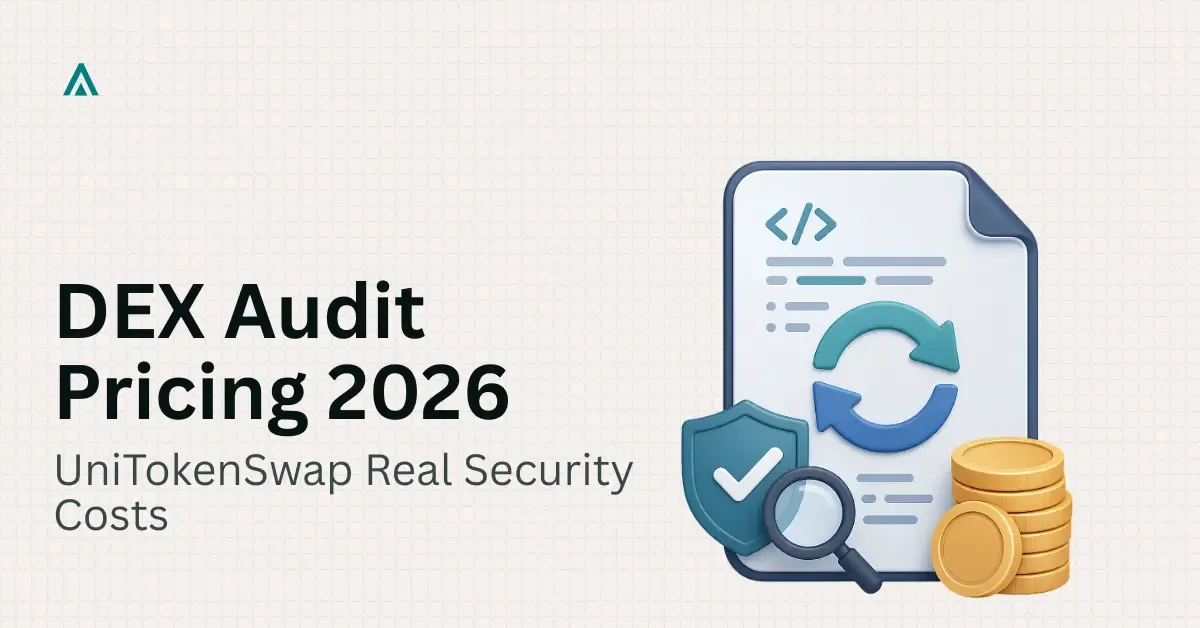
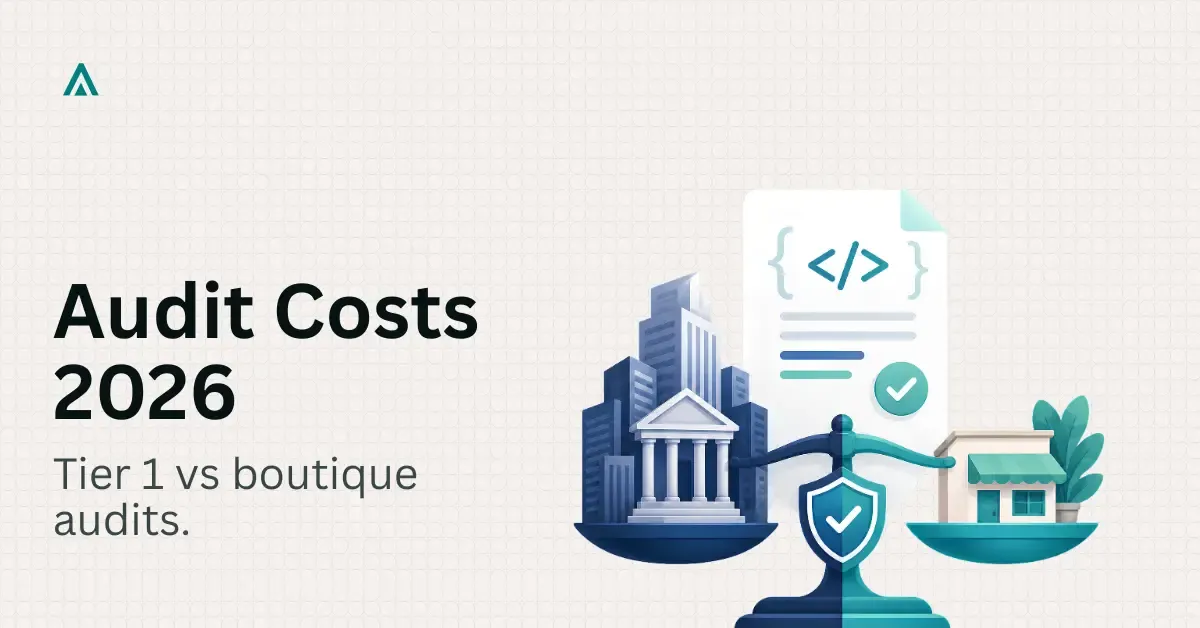
Estimate DEX smart contract audit costs in 2026 using real UniTokenSwap engineering data, Uniswap v4 hook pricing, and Tier 1 audit firm cost ranges for teams.
Frequently Asked Questions
- A DEX-specific audit covers the core swap and pool math, hook contract review if the protocol uses Uniswap v4 hooks, oracle and price-manipulation resistance testing, access-control mapping for admin functions, a severity-classified findings report, and typically one fix-verification pass on patched code. Boutique engagements often exclude the re-audit round unless purchased separately.
- AMM logic introduces flash-loan exposure, custom curve math, and in Uniswap v4 designs, hook contracts that execute arbitrary logic at swap time. Reviewers spend disproportionate hours modeling these attack surfaces compared to a boilerplate token contract, which pushes DEX audits toward the higher end of the fee range even at similar line counts.
- Testnet-only deployments with no real liquidity can defer a full paid audit, but any mainnet launch handling user funds should complete at least a boutique or contest-based review before TVL grows, since retrofitting an audit after a hack has already occurred does not recover lost funds.
- Gas optimization work happens alongside the audit rather than reducing its price directly, but a cleaner, singleton-pattern codebase with fewer redundant external calls is faster for reviewers to trace, which can shorten the manual-review timeline on a fixed hourly-rate engagement.
Don't Miss What's Next
Subscribe to newsletter
Tags:
DEX audit cost
AMM smart contract audit
Uniswap v4 hooks audit
UniTokenSwap
Smart Contracts
Get in Touch
Our team will get back to you within 24 hours.