Slither and Mythril: Static Analysis in CI/CD for Solidity
Table of Contents
Table of Contents
Share
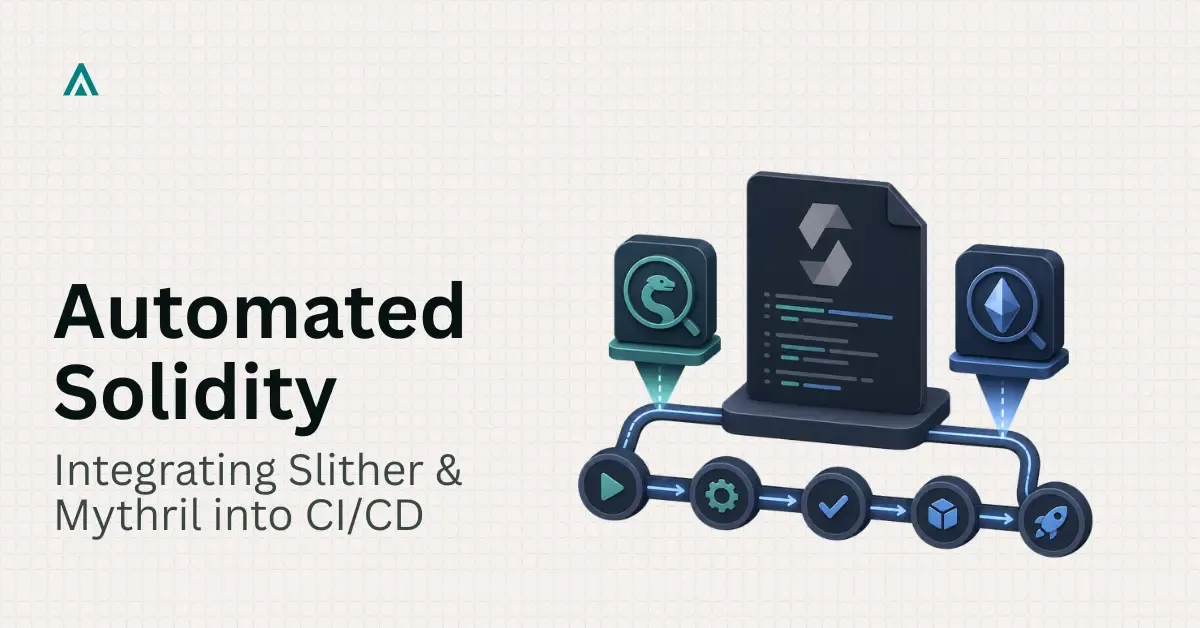
Wire Slither and Mythril into a 2024 GitHub Actions CI to catch 80+ Solidity vulnerability classes before deploy. Start hardening your pipeline today.
Frequently Asked Questions
- Slither is a Solidity static analysis framework built on an intermediate representation called SlithIR, and it finishes a full scan of a typical contract in a few seconds without any transaction execution. Mythril is a symbolic execution engine that explores EVM bytecode paths to find deeper logic flaws such as integer issues and complex reentrancy chains, but a full symbolic run can take several minutes per contract. Most teams run Slither on every pull request for speed and Mythril on a slower nightly or pre-release schedule for depth.
- Add a job step that installs slither-analyzer via pip inside a Python 3.8 or later container, then invoke crytic/slither-action from the GitHub Marketplace, pointing target at your contracts directory. Set fail-on to high so the job exits non-zero and blocks merge only on high-severity findings, keeping medium and informational findings visible in the log without stopping the pipeline. Cache the pip install step to keep run time under a minute on repeat builds.
- Yes, by scoping Mythril to a separate, slower-cadence job rather than running it on every commit. A common pattern runs Mythril's myth analyze command inside the official mythril/myth Docker image against only the contracts that changed in a pull request, with an execution timeout of 300 seconds per contract. Teams typically schedule a full-repository Mythril sweep nightly or before a release tag rather than on every push, since symbolic execution time grows with contract complexity.
- Map every finding to its SWC Registry identifier first, since both tools reference this shared classification and it lets you deduplicate overlapping reports from Slither and Mythril into a single ticket. Configure Slither's severity gate to block only on high-impact detectors while routing medium and low findings to a triage backlog reviewed weekly. Use a slither.config.json to suppress detectors that produce false positives for your specific architecture, documenting the suppression reason in the same commit so reviewers understand why a check was silenced.
Don't Miss What's Next
Subscribe to newsletter
Tags:
Smart Contracts
Security
Solidity
CI/CD
Static Analysis
DevSecOps
Get in Touch
Our team will get back to you within 24 hours.