EVM Storage Architecture: Gas Costs for Capital Allocators
Table of Contents
Table of Contents
Share
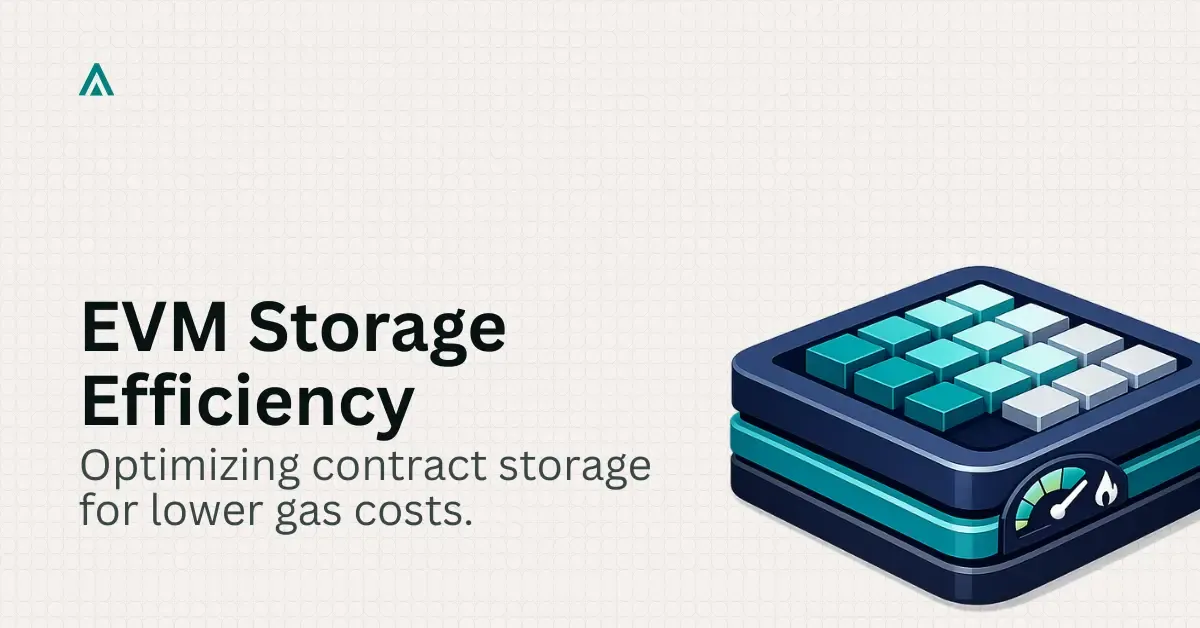
EVM storage costs 20,000 gas per SSTORE write. Audit contract efficiency to price DeFi protocol risk and spot gas weaknesses before capital commitment in 2024.
Frequently Asked Questions
- EVM storage is the persistent key-value store inside every smart contract, accessed via SLOAD and SSTORE opcodes. A cold SSTORE costs 20,000 gas (SSTORE_SET_GAS per EIP-2200) because writing to storage requires updating Ethereum's global state trie, which every validator must process. EIP-2929 refined gas pricing in 2021 with a cold/warm access model, adding a 2,100 cold surcharge on first-access reads. Poorly architected contracts impose measurable fee drag on every user transaction, directly compressing protocol revenue margins.
- High per-transaction gas costs reduce effective yield for LPs and traders by eroding net returns on small positions. A protocol charging 3 percent trading fees but consuming 200,000 gas per swap at elevated gas prices can see 30 to 60 percent of fee revenue consumed by user gas overhead, reducing retention and TVL (EIP-2929, eips.ethereum.org, April 2021). Capital allocators should benchmark contract gas efficiency when underwriting DeFi protocol investments, since architecture quality directly predicts fee sustainability.
- Well-engineered protocols minimize SSTORE calls through struct packing, use ERC-1967 standard proxy storage slots to avoid collisions, batch state updates into single storage writes, and warm up frequently accessed slots in the same transaction via EIP-2929 access lists. Protocols using singleton contract architecture consolidate state into fewer storage addresses, reducing cold SLOAD costs across user interactions. These patterns signal production-grade engineering discipline.
Don't Miss What's Next
Subscribe to newsletter
Tags:
EVM
Smart Contracts
Gas Optimization
DeFi Investment
Capital Allocator
Get in Touch
Our team will get back to you within 24 hours.