Cross-Chain Bridge Security: Lock-Mint vs Liquidity Pools
Table of Contents
Table of Contents
Share
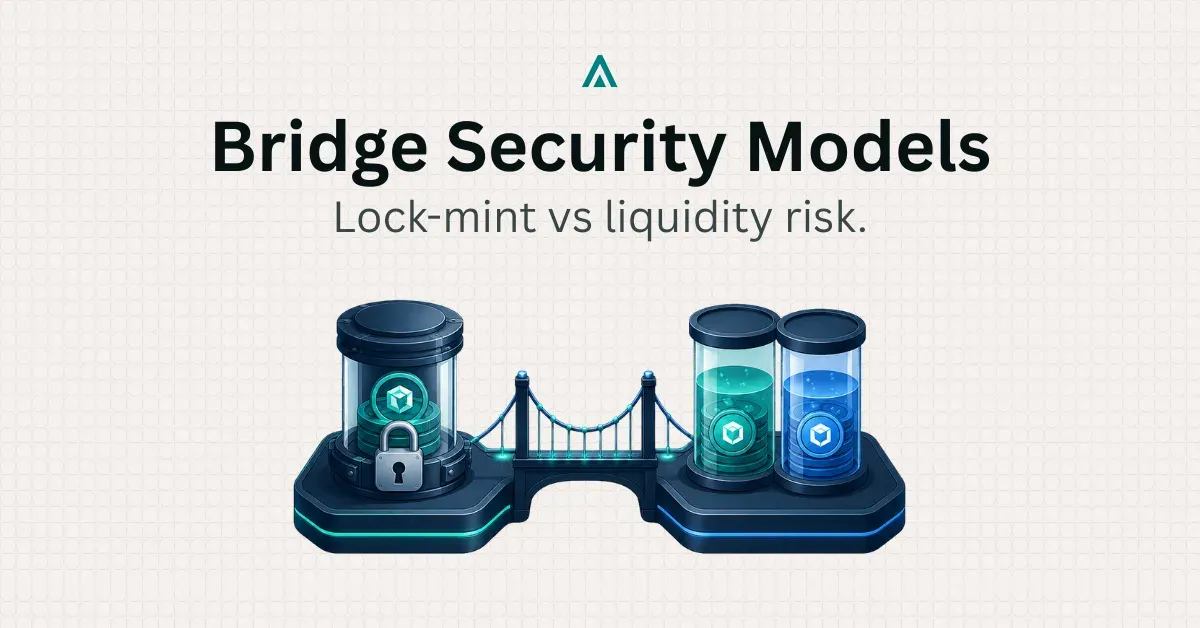
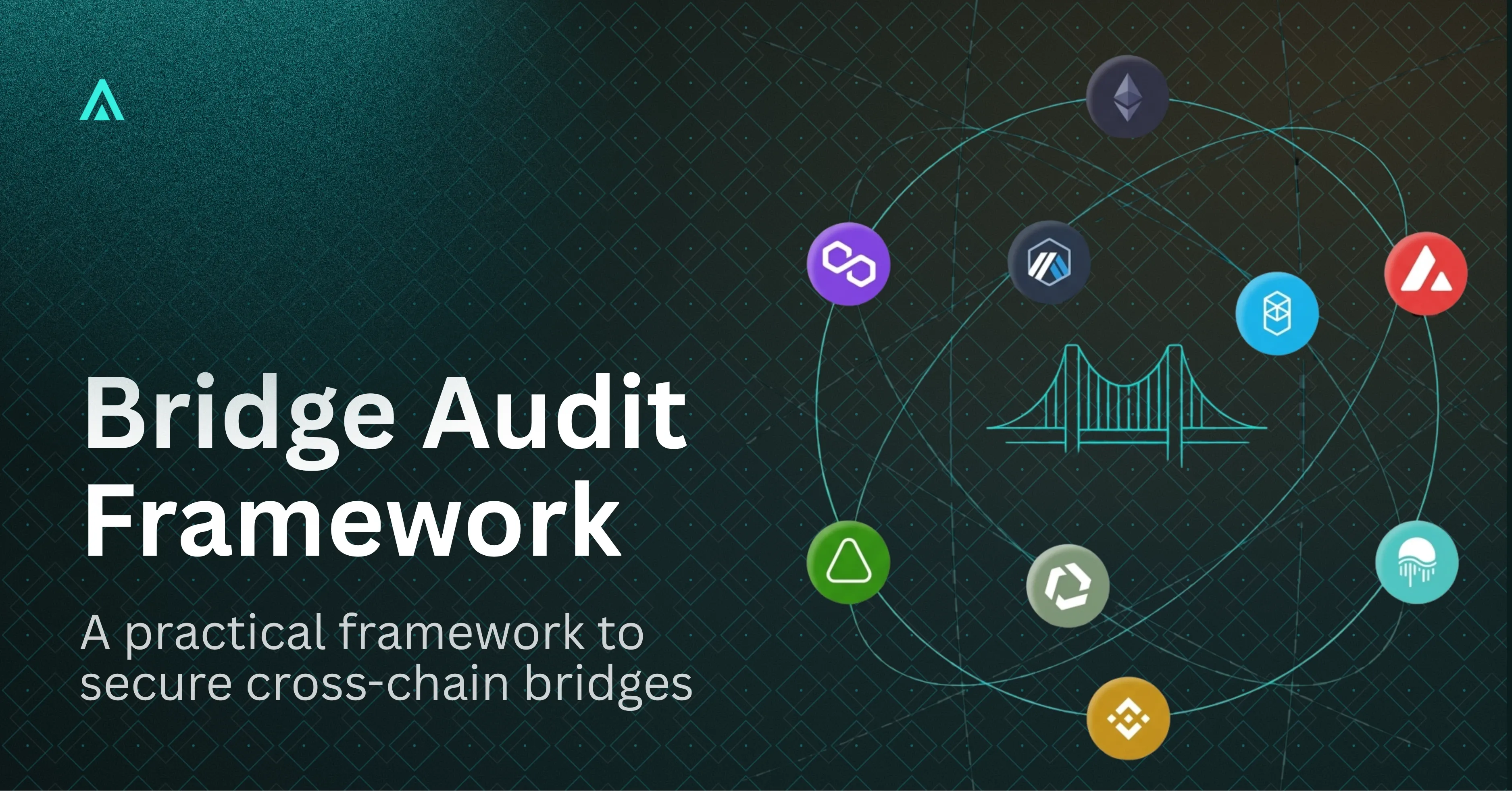
Cross-chain bridges lost $2.5B+ in 2022. Compare lock-mint vs liquidity pool security tradeoffs, validator trust models, and Solidity patterns. Read the full analysis.
Frequently Asked Questions
- Lock-mint bridges concentrate risk in two places: the escrow contract holding locked collateral and the validator set authorizing mints. A single exploit of either component can drain all locked assets, as seen in Wormhole ($320M) and Ronin ($625M). Liquidity pool bridges distribute risk across multiple pool contracts and require exploiting pool logic or the rebalancing mechanism. However, liquidity pool bridges introduce LP counterparty risk and slippage that lock-mint designs do not have. For assets where wrapped token UX is acceptable (non-stablecoins), lock-mint with ZK verification is the more trust-minimized design. For stablecoins where users expect native tokens, liquidity pool bridges make the better UX tradeoff, provided slippage guards are correctly implemented by downstream integrators.
- Five checks cover the majority of integration risk. First, verify the bridge's validator trust model and understand what threshold of compromise would allow fund theft: document this assumption in your protocol's architecture decision record. Second, test slippage parameter behavior: set `minAmountOut = 0` in a test environment and confirm whether your protocol handles receiving fewer tokens than expected without creating bad debt. Third, confirm finality assumption alignment: if your protocol credits users before the bridge message is economically final, an attacker can exploit the gap. Fourth, check that the bridge contract you are calling is the canonical proxy, not a cloned or deprecated version (many protocols have integrated deprecated bridge versions that were never upgraded). Fifth, review the access control on bridge fee parameters: some bridges allow governance to change fees in ways that could make your protocol economically unviable. Detailed guidance is available through the [Ancilar smart contract audit](https://www.ancilar.com/services/smart-contract-audit) service.
- Ronin and Wormhole required technical sophistication to exploit: Ronin demanded private key access to 5 specific validator nodes; Wormhole required understanding Solana's account model well enough to craft a fake SignatureSet account. Both were opportunistic attacks requiring significant preparation. Nomad's bug, once public, required zero cryptographic sophistication: the exploit was a single forged transaction with a zero Merkle root, executable by anyone who could copy the transaction calldata and change the recipient address. The permissionless, copy-paste nature of the exploit turned it into a public good problem, since the funds were going to be stolen regardless, so rational actors chose to participate rather than alert Nomad. This demonstrates that broadcast exploits (where anyone can participate once the bug is known) are categorically more damaging than targeted exploits requiring specialized access. Protocols should design around the assumption that any public bug will be exploited by hundreds of actors simultaneously, making circuit breakers and withdrawal rate limits critical even if they cannot prevent the initial exploit.
Don't Miss What's Next
Subscribe to newsletter
Tags:
cross-chain bridges
bridge security
lock-mint
liquidity pools
validator trust
MPC
ZK proofs
smart contracts
DeFi security
L2 scaling
Smart Contracts
Get in Touch
Our team will get back to you within 24 hours.