Connecting CrypTalk's Wallet Messaging to Marketplace Settlement
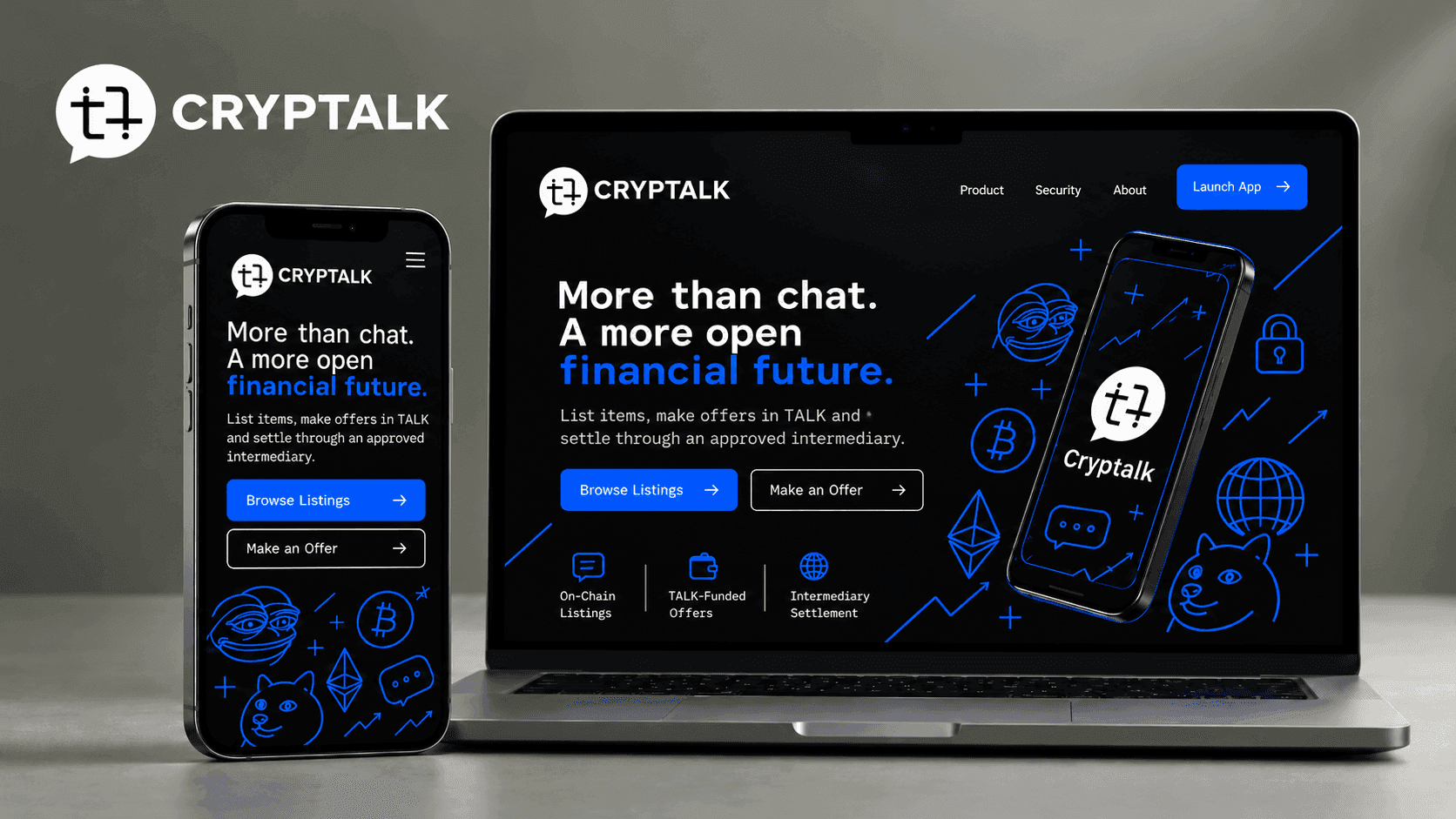
Ancilar built an Ethereum marketplace contract and integrated it with CrypTalk's SDK and web flow. The implementation supports listings, TALK-funded offers, refunds for open offers and settlement approved by an authorized intermediary.
- Team Size
- 4
- Project Duration
- 5 Months
- Deployment
- Ethereum Mainnet
Technical Implementation
Execution Summary
The marketplace connects wallet-based interaction with a defined offer lifecycle, from listing and funding to refunds and approved settlement. Marketplace records remain public on Ethereum.
- 01
On-Chain Listings
Any wallet can list an item or service with a title, description, image reference, tags and a category. The contract stores the listing and the address that created it.
- 02
TALK-Funded Offers
Buyers make offers in TALK, which the contract holds. While an offer is open, the buyer can cancel it or the seller can reject it, and the buyer is refunded in full.
- 03
Intermediary-Approved Settlement
After the seller accepts an offer, only an intermediary approved by the contract owner can settle it. Settlement pays the seller and updates the buyer address on the listing.
- 04
SDK and Web Integration
Ancilar connected the contract to CrypTalk's SDK and web flow, so marketplace actions are signed from the same wallet used for messaging.
Tech Stack:
 Ethereum
 Solidity
 Typescript
 OpenZeppelin
 Hardhat
 Next.js
 Node.js
 wagmi
 PostgreSQLEthereumSolidityTypescriptOpenZeppelinHardhatNext.jsNode.jswagmiPostgreSQLEthereumSolidityTypescriptOpenZeppelinHardhatNext.jsNode.jswagmiPostgreSQL
FAQ
Frequently Asked Questions
An Ethereum marketplace contract for listings, TALK-funded offers, refunds for open offers and intermediary-approved settlement, plus its integration with CrypTalk's SDK and web flow.
Five months, with a team of four.
Delivery happens off-chain, where a contract cannot check it. After acceptance, an intermediary approved by the contract owner settles the sale, which pays the seller.
Not in the deployed contract. After acceptance, the buyer cannot cancel and the seller cannot reject. The TALK stays in the contract until an approved intermediary settles the sale.
No. Listings, wallet addresses, offers and settlements are public on Ethereum. Messaging and marketplace activity have different visibility.
A clear proven process, that delivers
End of Scroll. Start of Discovery.
You've seen our ideas - now go deeper.
Discover more insights, guides, and engineering practice.