What Is Tokenomics? A Token Design Guide for Founders
Table of Contents
Table of Contents
Share
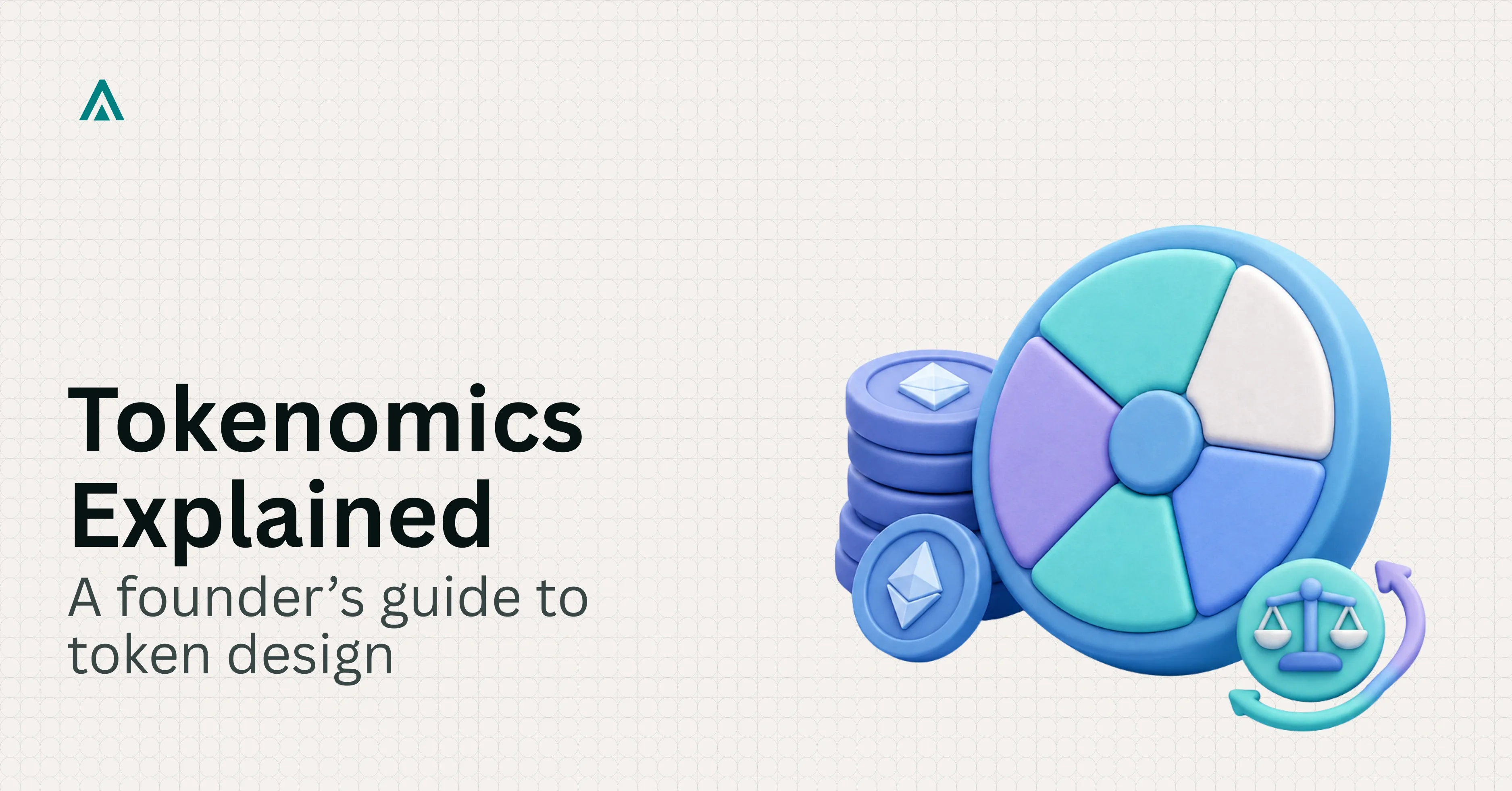
Poor tokenomics causes 27.6% of ICO failures. Learn token supply models, vesting schedules, and allocation frameworks founders use to build lasting protocols.
Frequently Asked Questions
- Tokenomics is the economic model governing a cryptocurrency or token. It covers total supply, distribution, vesting schedules, inflation and deflation mechanisms, utility, and incentive structures. Poor tokenomics is consistently cited as a primary cause of ICO failures, making it one of the most critical design decisions for any blockchain project.
- A vesting schedule outlines when and how tokens are released to founders, team members, advisors, and investors. The most common structure is a 4-year vest with a 1-year cliff: no tokens unlock for the first year, then a portion releases at the cliff, followed by monthly linear unlocks over the remaining period. This structure aligns long-term incentives and reduces sell pressure at launch.
- Industry benchmarks suggest the largest share go to community and ecosystem, followed by investors and core team, with treasury and public sale receiving smaller allocations. The full allocation breakdown with vesting standards is covered in the table above. Projects that concentrate too much supply with insiders using short vesting schedules typically face sell pressure and loss of community trust at the first major unlock.
- Inflationary tokenomics introduce new tokens over time (like staking rewards), which funds network participation but dilutes holders. Deflationary tokenomics permanently remove tokens from circulation through burn mechanisms, such as Ethereum's EIP-1559 base fee burn and Bitcoin's fixed 21-million cap. Most sustainable projects use a hybrid model that balances both approaches.
- Real-world asset tokenization projects require especially rigorous tokenomics because the tokens represent legal claims on off-chain assets. Supply must match the underlying asset base, vesting must comply with securities regulations, and utility design must align with how fractional ownership or yield distribution works. RWA tokenization has grown substantially in on-chain value and requires institutional-grade token design.
Don't Miss What's Next
Subscribe to newsletter
Tags:
tokenomics explained
token economics
tokenomics design
token supply
vesting schedule
Enterprise Blockchain
DeFi
Get in Touch
Our team will get back to you within 24 hours.