RPC Provider Economics: A Node Infrastructure Brief
Table of Contents
Table of Contents
Share
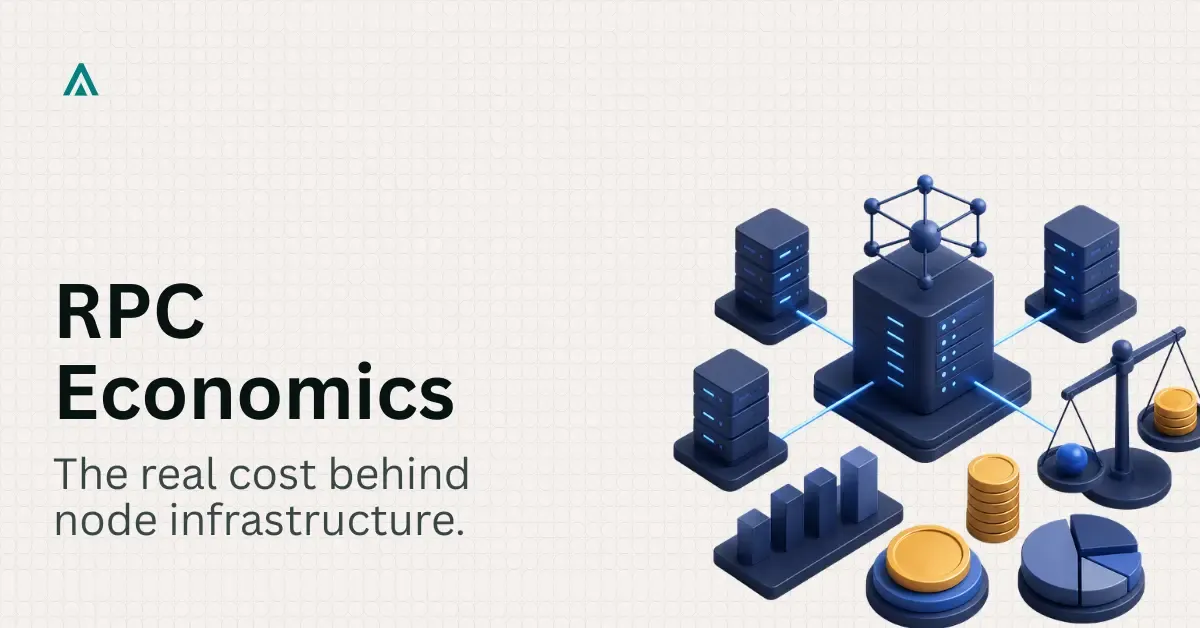
Capital allocators briefed on RPC provider economics, latency arbitrage, and the surging node infrastructure market emerging in January 2024. Assess now.
Frequently Asked Questions
- An RPC provider operates remote procedure call endpoints that allow developers and applications to query blockchain state and submit transactions without running a full node. Providers like Alchemy, Infura, and QuickNode abstract node management, offering metered API access with uptime guarantees. The category has attracted over two hundred million dollars in venture funding as of early 2024.
- RPC latency directly determines whether arbitrage and liquidation bots capture on-chain opportunities. A sub-200 ms round-trip is the threshold for viable MEV extraction. Independent 2022 benchmark testing between Tier-1 providers found response-time gaps as small as two milliseconds in a single region, meaning provider selection now hinges on regional coverage and failover design as much as raw speed.
- Centralized RPC providers create single points of failure for the entire Web3 stack. Infura outages in 2020 and 2022 caused widespread dApp downtime across the ecosystem. More than 30 million MetaMask users depend on Infura as their sole provider, meaning one service disruption affects a substantial share of active Ethereum users simultaneously.
Don't Miss What's Next
Subscribe to newsletter
Tags:
Node Infrastructure
RPC Providers
Web3 Investment
Blockchain Economics
Capital Allocators
Web3 Development
Get in Touch
Our team will get back to you within 24 hours.