AI Agent Economies: On-Chain Autonomous Capital Allocation
Table of Contents
Table of Contents
Share
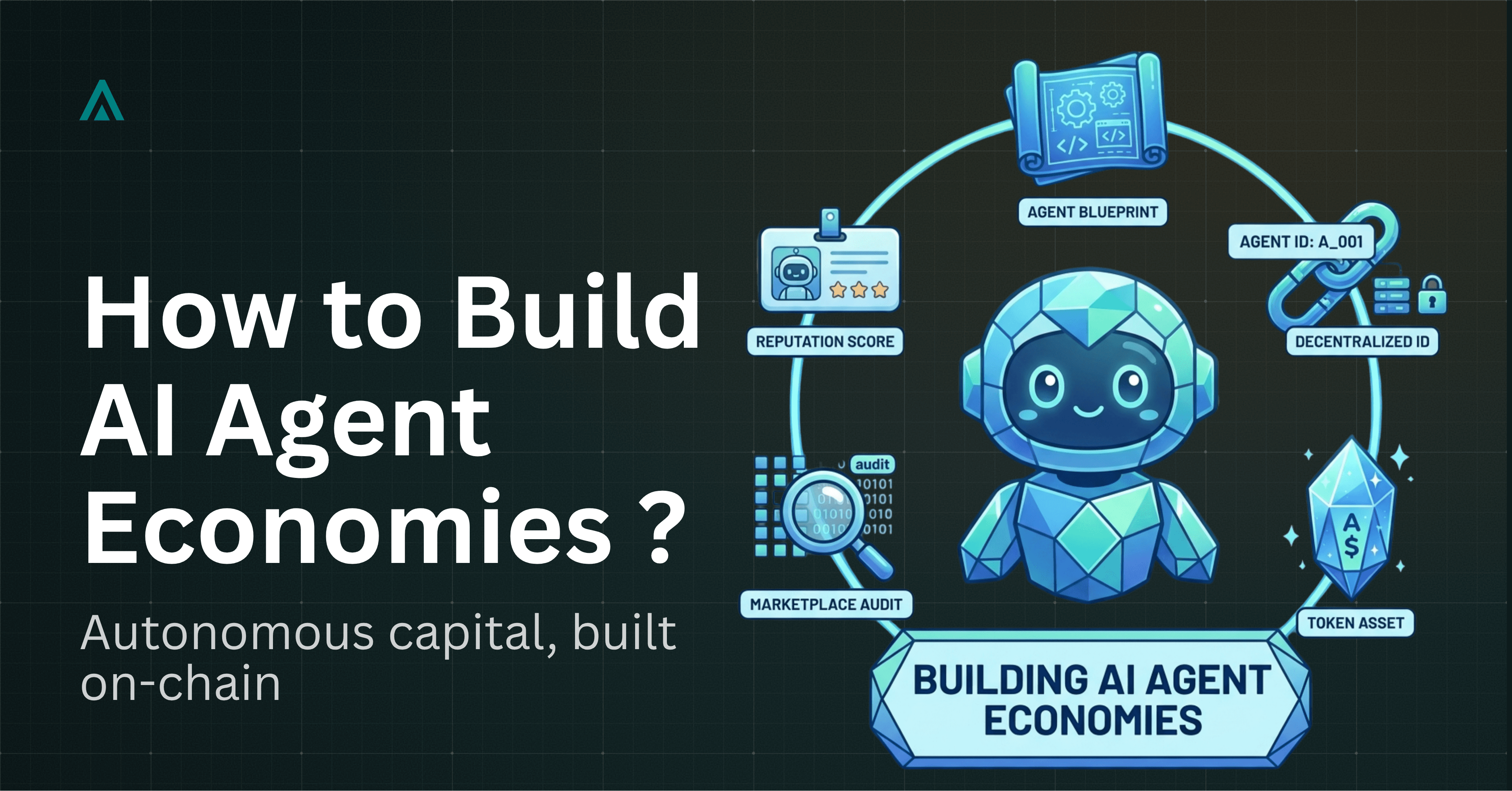
On-chain AI agent economies manage capital autonomously with MiCA/DORA compliance built in. Market reaches $127.86B by 2035. Assess the architecture now.
Frequently Asked Questions
- An on-chain AI agent economy is a network of software agents that hold blockchain wallets, execute smart contract transactions autonomously, and allocate capital across DeFi protocols without requiring human approval for each action. Agents operate using account abstraction standards such as ERC-4337 and EIP-7702, which encode spending policies, whitelisted protocols, and time-bound execution windows at the contract layer.
- Traditional algorithmic trading systems execute pre-coded rules inside centralized infrastructure with no on-chain footprint until settlement. On-chain AI agents hold sovereign wallets, sign transactions using programmable account logic, and operate inside the protocol layer itself. Their actions are transparent, auditable in real time on-chain, and governed by smart contract constraints rather than off-chain risk systems that can be bypassed or overwhelmed during high-volatility events.
- EU-regulated financial institutions face obligations under DORA (EU 2022/2554), applicable from 17 January 2025, requiring ICT risk management, incident reporting, and resilience testing for all automated systems including AI agents. MiCA (EU 2023/1114) governs any crypto-asset service activity the agent performs, with full CASP authorisation required from 1 July 2026. Autonomous financial decision-making systems are classified as high-risk AI under the EU AI Act Annex III, with conformity assessments mandatory before deployment.
Don't Miss What's Next
Subscribe to newsletter
Tags:
Agents/Agentic
CrypTalk
AI
DeFAI
On-Chain Autonomy
Capital Allocation
MiCA
DORA
AI Agents
Get in Touch
Our team will get back to you within 24 hours.