What Is Staking? Proof of Stake Validators and Liquid Staking Explained
Table of Contents
Table of Contents
Share
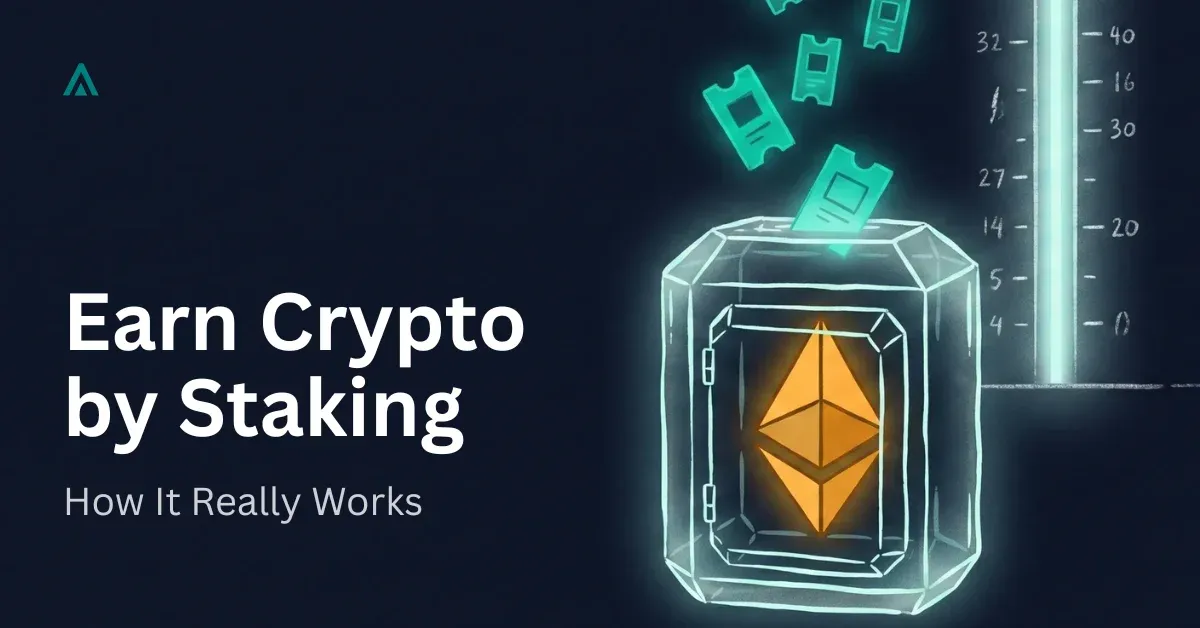
35M ETH staked on Ethereum in 2025. Build on Proof of Stake mechanics, validator setup, liquid staking risks, and how Pectra changes institutional staking.
Frequently Asked Questions
- To run a solo validator node, you need 32 ETH. Through liquid staking protocols like Lido or Rocket Pool, users can participate with as little as 0.01 ETH. As of 2025, the majority of all staked ETH is held through these pooled services rather than solo validators.
- Slashing is a penalty mechanism where a validator's stake is partially destroyed for malicious behavior or severe protocol violations such as double-signing. In 2024, the network-wide slashing rate remained negligibly low, as most institutional validators use high-availability architecture and slashing protection databases to prevent double-signing events.
- No. Staking yield is paid in the network's native token. If the price of ETH drops significantly, a single-digit staking APY will not prevent a net loss in fiat terms. Additionally, yields fluctuate based on total staked supply: more stakers lead to lower individual rewards.
- Liquid staking lets users deposit any amount of ETH into a pooled protocol and receive a tradable receipt token (LST) representing their staked position. Unlike solo staking, which requires 32 ETH and locks capital in the protocol withdrawal queue, LSTs can be sold or used as collateral in DeFi without waiting for the exit queue.
Don't Miss What's Next
Subscribe to newsletter
Tags:
Staking
Proof of Stake
Ethereum
Liquid Staking
LST
Validators
2025
Blockchain
Get in Touch
Our team will get back to you within 24 hours.