What Is Blockchain? How Distributed Ledger Technology Works
Table of Contents
Table of Contents
Share
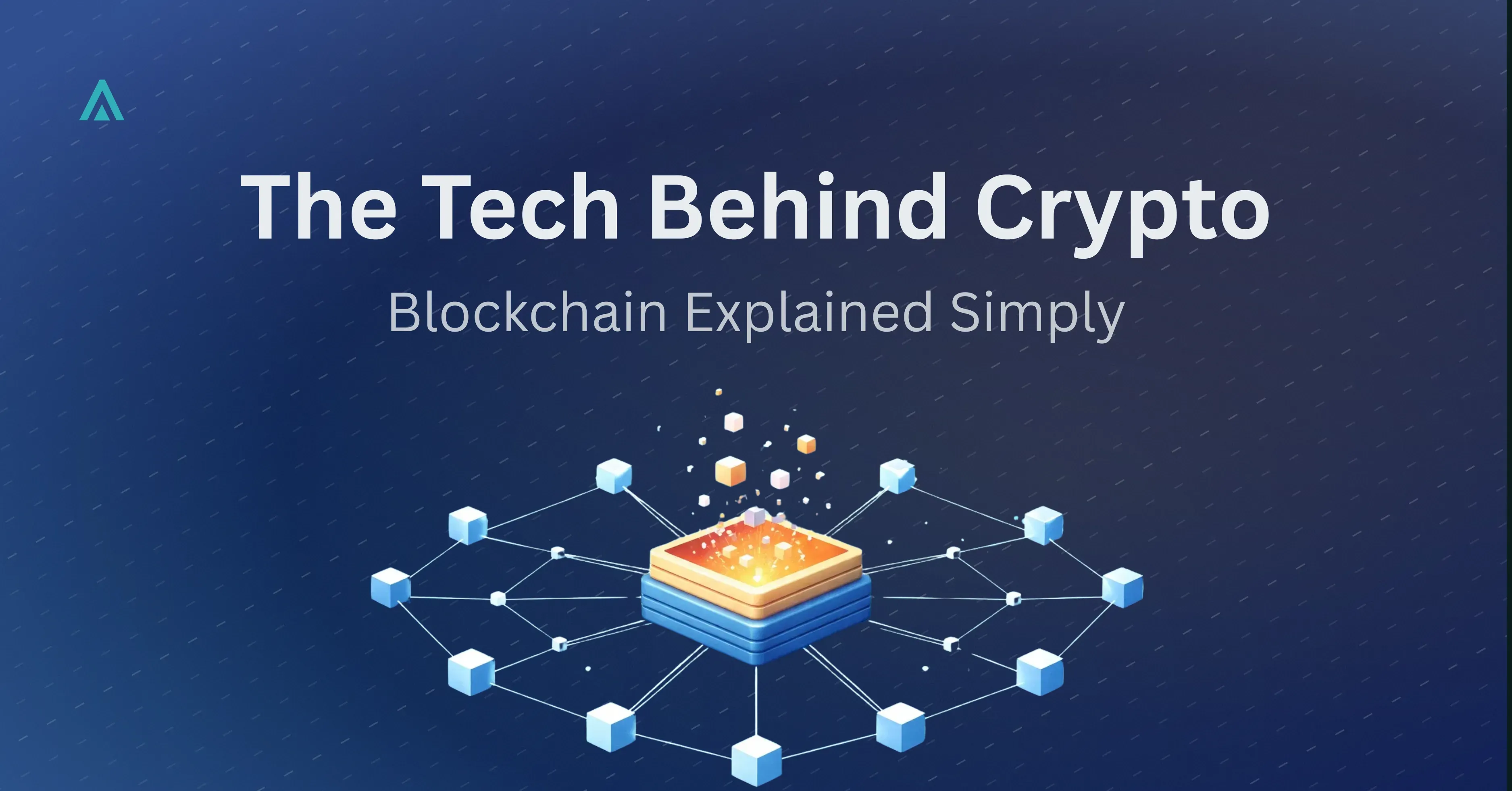
Blockchain market hits $32.99B in 2025, growing to $393B by 2030. Build on the right architecture: consensus, Merkle trees, and nodes for enterprise CTOs.
Frequently Asked Questions
- It depends on your trust model. Public blockchains offer censorship resistance and composability, valuable for tokenized assets and DeFi. Private chains offer permissioned access, higher throughput, and data privacy. The majority of FSI executives in Deloitte's Global Blockchain Survey said they would lose competitive advantage without blockchain adoption (Deloitte, 2021). Neither architecture is universally better.
- Layer 1 throughput is intentionally limited: Bitcoin and Ethereum process tens of TPS live. Layer 2 rollups (zkSync Era, Arbitrum One) handle far higher volumes by executing transactions off-chain and settling to Ethereum (Chainspect, April 2025). For enterprise workloads, permissioned BFT chains like Hyperledger Fabric deliver high throughput with immediate finality and data privacy.
- Ethereum uses Proof of Stake (PoS) since The Merge in September 2022. Validators stake 32 ETH as collateral and are chosen pseudo-randomly to propose and attest blocks. The switch reduced Ethereum's energy consumption by orders of magnitude, from roughly 112 TWh per year down to a fraction of that figure (Ethereum Foundation, post-Merge data).
- A traditional database has a central administrator who can edit or delete records. Blockchain distributes control across thousands of independent nodes. Bitcoin runs on 73,886 nodes, Ethereum on roughly 14,000 (Etherscan, 2025). No single entity can unilaterally alter the ledger, making it useful for multi-party trust scenarios where participants do not fully trust each other.
- A blockchain is a distributed database shared across a network of computers where records are grouped into cryptographically linked blocks. No single party controls it. Once a block is confirmed, its data cannot be altered without redoing all subsequent blocks, a property called immutability. The global blockchain market is on a steep growth trajectory from 2025 to 2030, growing at a compound annual rate that outpaces most technology sectors (MarketsandMarkets, 2025).
Don't Miss What's Next
Subscribe to newsletter
Tags:
what is blockchain
blockchain explained
blockchain technology
distributed ledger
enterprise blockchain
consensus mechanisms
Merkle tree
Blockchain
Get in Touch
Our team will get back to you within 24 hours.