Rollup Economics: 2024 L2 Sequencer Profitability Thesis
Table of Contents
Table of Contents
Share
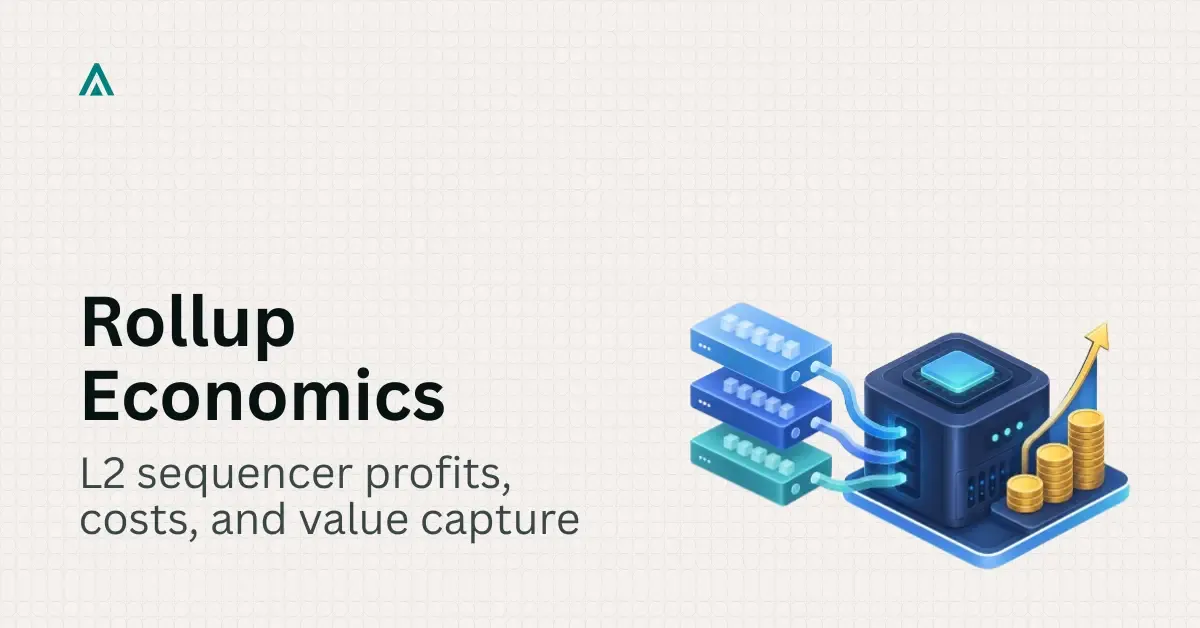
Ethereum L2 rollups crossed $18B TVL by end of 2023. Capital allocator framework for sequencer revenue, EIP-4844 compression, and ARB/OP token exposure.
Frequently Asked Questions
- An L2 sequencer collects user transaction fees in the rollup's native gas token, then pays Ethereum L1 to post the underlying data and state commitments. The gross margin is the spread between the two, plus any maximal extractable value the sequencer captures from transaction ordering. As of January 2024, this margin is the dominant revenue line for both Arbitrum One and Optimism Bedrock.
- EIP-4844, expected to ship with the Dencun upgrade in early 2024, introduces blob-carrying transactions that price rollup data separately from regular calldata. The expected outcome is materially lower L1 data costs for rollups, which compresses sequencer margins but also reduces user fees. Sequencer revenue may decline in absolute terms while transaction volume grows.
- ARB and OP are the dominant governance tokens for the two leading optimistic rollups. As of early 2024, neither token has direct claim on sequencer revenue, which flows to the protocol treasury controlled by the DAO. The investment thesis is governance share over future fee-switch activation, not current cash flow. Allocators should price the gap between governance utility and revenue claim explicitly.
Don't Miss What's Next
Subscribe to newsletter
Tags:
rollup economics
L2 sequencer
Ethereum scaling
investment thesis
Blockchain
Get in Touch
Our team will get back to you within 24 hours.