On-Chain Indexing Investment Thesis: The Graph Protocol
Table of Contents
Table of Contents
Share
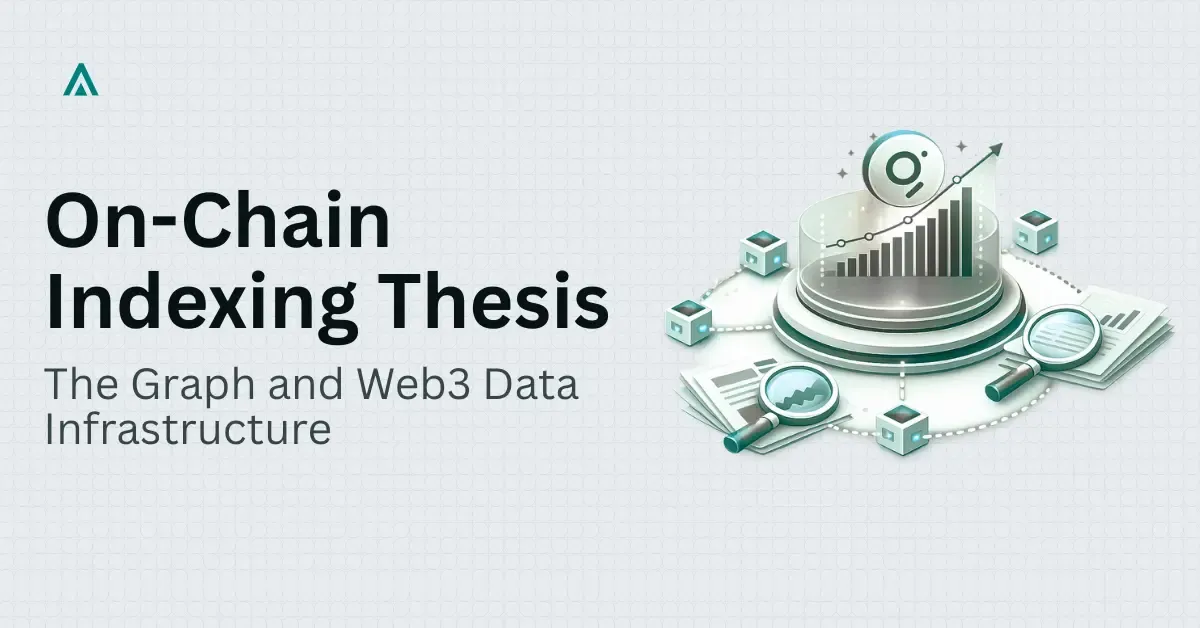
The Graph indexes over 500 billion records across 50+ blockchains. Assess the capital allocator case for subgraph infrastructure and on-chain indexing in 2024.
Frequently Asked Questions
- The Graph is a decentralized indexing protocol that organizes blockchain data into queryable subgraphs. Developers define a subgraph manifest specifying which smart contract events to index, and The Graph's network of indexers process and serve that data via a GraphQL API. As of January 2024, the network has processed over 500 billion queries across Ethereum, Polygon, Arbitrum, and more than 45 other chains.
- The Graph's hosted service was a centralized API endpoint operated by Edge and Node, making it free and easy to use but introducing a single point of failure. The decentralized network replaces it with a market of independent indexers who stake GRT tokens as collateral, earning query fees and indexing rewards. This creates economic incentives for data availability and fault tolerance that the hosted service could not provide.
- Every DeFi protocol that displays prices, positions, or historical liquidity data depends on an indexing layer to make raw blockchain events readable at application speed. Without reliable indexing, user-facing products fail, liquidity migrates, and protocol revenue falls. Capital allocators backing DeFi ventures should treat indexing infrastructure as a critical dependency in technical due diligence, alongside audits and oracle selection.
Don't Miss What's Next
Subscribe to newsletter
Tags:
The Graph
On-Chain Indexing
Subgraph
DeFi Infrastructure
ICP-1
Investment Thesis
Blockchain Data
Blockchain
Get in Touch
Our team will get back to you within 24 hours.