Multi-Agent Coordination on Ethereum: A2A Protocol & Gas
Table of Contents
Table of Contents
Share
Build production multi-agent systems on Ethereum using A2A and ERC-8004. EIP-1153 transient storage cuts coordination gas. Architecture guide, May 2026.
Frequently Asked Questions
- EIP-7702, activated in the Pectra hard fork on May 7, 2025, introduces SET_CODE_TX_TYPE (transaction type 0x04) that lets an externally owned account temporarily delegate execution to a smart contract address. For multi-agent systems, this means an agent's EOA can dynamically adopt smart-contract logic for a bounded session without permanently converting to a smart account. The economic impact is significant: agents can use ERC-4337 paymaster infrastructure to sponsor gas without holding native ETH, batch multiple sub-agent calls under a single authorized session, and revoke delegation at session end without additional on-chain state. EIP-7702 is complementary to ERC-4337, not a replacement, and teams should use both: ERC-4337 for permanent smart account features (custom validation, gas sponsorship), EIP-7702 for temporary capability grants and session-scoped agent permissions.
- Two EU regulations create binding obligations for teams deploying autonomous agents on Ethereum. First, the EU AI Act (Regulation 2024/1689, effective August 2, 2026 for high-risk systems) Chapter III Articles 6 through 49 require high-risk AI systems to maintain detailed technical documentation, automatic logging of agent decisions sufficient for post-hoc audit, and human oversight mechanisms that can interrupt autonomous operation. Second, MiCA (Regulation 2023/1114) Article 19 imposes disclosure obligations on white papers for utility tokens used in agent payment rails, requiring accurate description of the token's function in the agentic system. FATF Recommendation 15 (updated October 2021) additionally requires virtual asset service providers to apply AML screening to AI agent counterparties, treating agent-initiated transactions equivalently to human-initiated transfers above threshold.
- Three patterns produce the largest gas savings in multi-agent Ethereum systems. First, calldata batching through a singleton multicall router amortizes the 21,000 gas base transaction cost across multiple agent state updates in a single transaction, reducing per-operation overhead by 40 to 60 percent at typical batch sizes. Second, EIP-1153 transient storage (TSTORE and TLOAD opcodes, activated in the Dencun upgrade of March 2025) costs 100 gas per access for ephemeral cross-call state, compared to 20,000 gas for a cold SSTORE, making it the correct primitive for inter-agent coordination flags and reentrancy locks within a single transaction. Third, EIP-7702 session keys with bounded scope and TTL let agents submit pre-authorized transaction batches through a paymaster, eliminating redundant authorization checks that would otherwise cost separate transaction fees.
- ERC-8004 went live on Ethereum mainnet on January 29, 2026, establishing three on-chain registries: Identity, Reputation, and Validation. The Identity Registry uses ERC-721 with URIStorage so each agent's on-chain AgentID resolves to an off-chain AgentCard JSON document that is A2A-compliant. This means an A2A client can discover an agent's capabilities by resolving the ERC-8004 AgentID on-chain, then fetching the linked AgentCard to get skill definitions and service endpoints. The Reputation Registry stores authorized attestations about agent task outcomes, and the Validation Registry provides economic staking hooks for high-stakes computations. Together, these registries give A2A agents a verifiable, censorship-resistant identity layer on Ethereum without requiring any changes to the A2A specification itself.
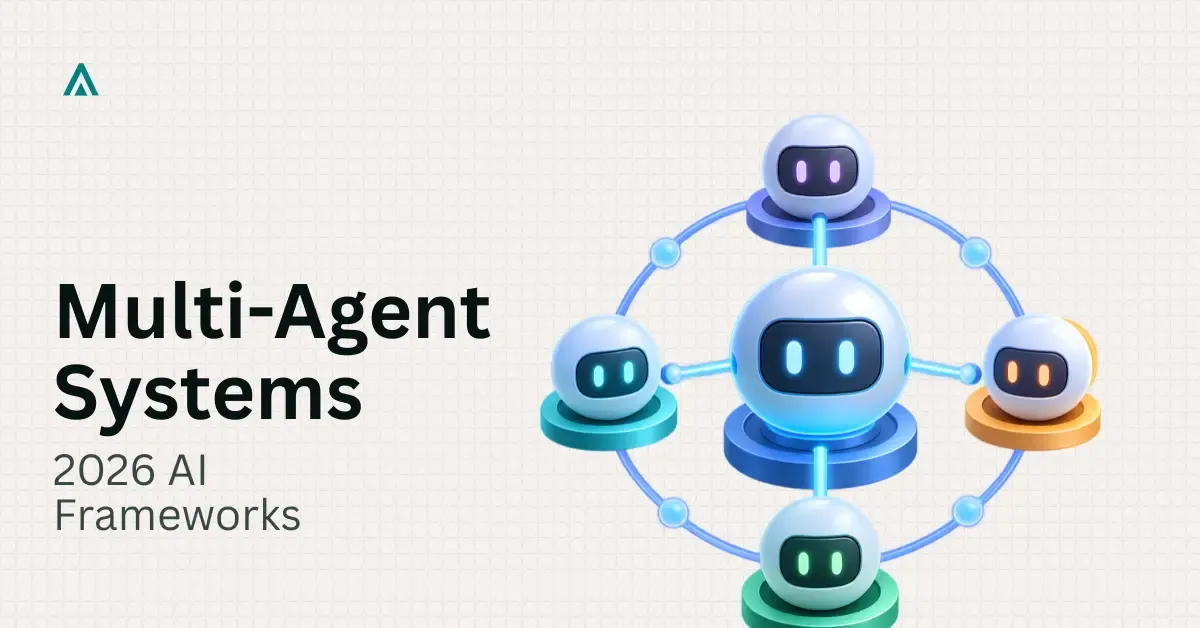
- The A2A (Agent-to-Agent) protocol, announced by Google in April 2025 and contributed to the Linux Foundation in June 2025, is an open standard for agent discovery and task delegation using HTTP, JSON-RPC 2.0, and Server-Sent Events. It defines Agent Cards for capability advertisement, Tasks for unit-of-work tracking, and Messages for multi-turn context. MCP (Model Context Protocol) by Anthropic focuses on giving a single AI model access to external tool contexts. A2A operates at the agent-to-agent coordination layer, while MCP operates at the model-to-tool layer. For Ethereum systems, A2A handles orchestration between autonomous agent services, while MCP handles how an individual agent reads chain state or calls tools. Production systems typically use both: A2A for coordination, MCP for context injection.
Don't Miss What's Next
Subscribe to newsletter
Tags:
A2A Protocol
Multi-Agent Systems
Ethereum
Gas Optimization
ERC-8004
EIP-7702
Agentic AI
AI-Web3
Get in Touch
Our team will get back to you within 24 hours.