Docker vs Podman: Which One Should You Use in Production?
Table of Contents
Table of Contents
Share
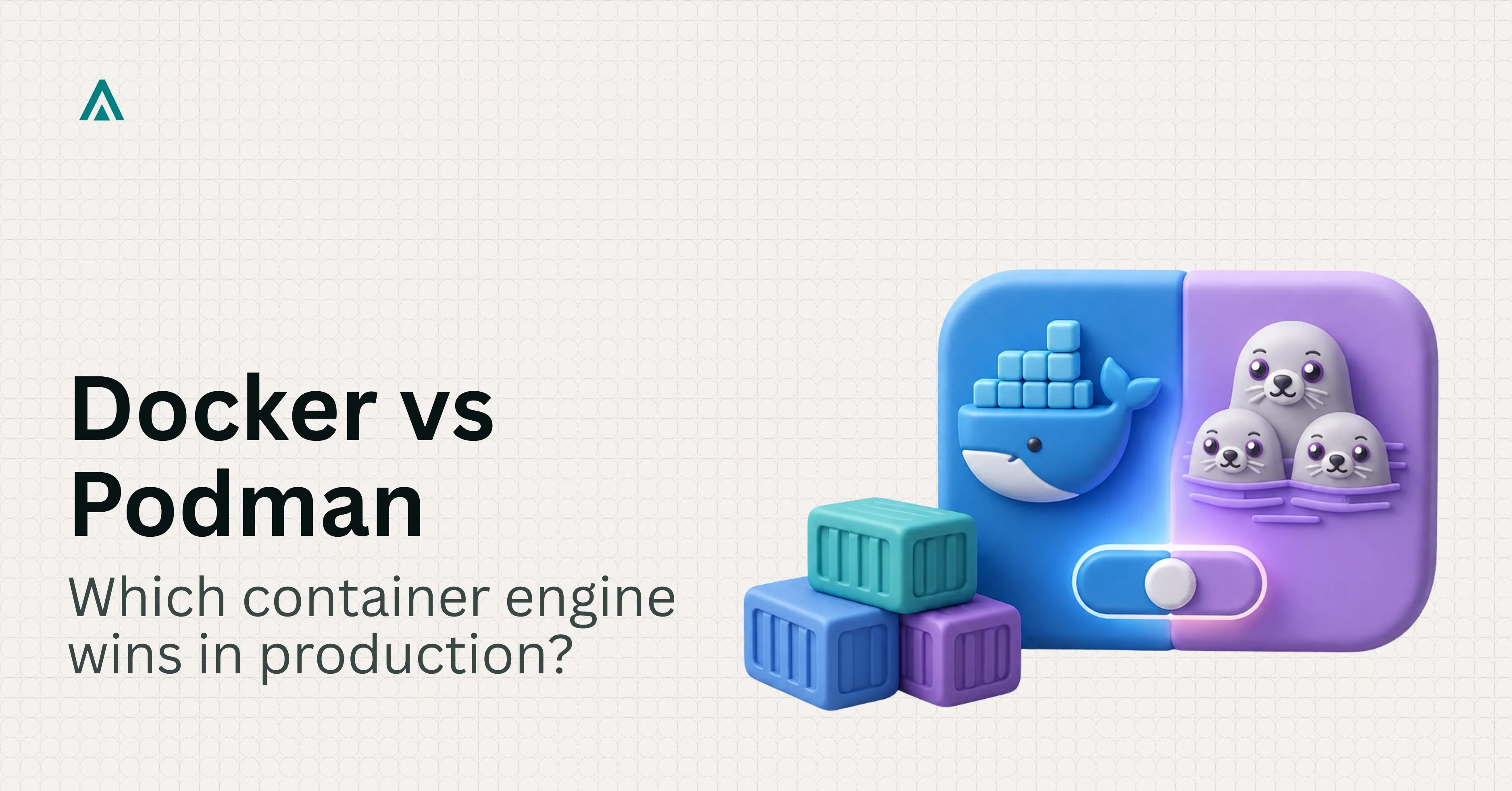
Docker vs Podman for production in 2025: audit daemonless security, Kubernetes integration, and ecosystem maturity to choose the right container runtime.
Frequently Asked Questions
- Docker uses a centralized background daemon (dockerd) that runs with root privileges to manage all container operations. Podman is daemonless: each container runs as a direct child process of the user who launched it, with no persistent background service required. This means Podman containers are tied to individual user sessions, reducing the blast radius of any compromise.
- Yes. Podman ships a drop-in CLI alias such that most docker commands work unchanged: podman pull, podman run, podman build, podman push, and podman compose all behave identically to their Docker counterparts. Podman also supports Docker-compatible socket emulation via podman system service, allowing tools that speak to the Docker API to work without modification.
- Yes. Podman is production-ready and is the default container engine in Red Hat Enterprise Linux and OpenShift. It natively supports pod semantics that map directly to Kubernetes pod specs, and the podman generate kube command exports running pods to Kubernetes YAML. Container security delays are a well-documented pain point in production DevOps workflows, and Podman's rootless-first architecture directly addresses the daemon-based attack surface that causes most container security incidents.
- No. Podman builds OCI-compliant images from standard Dockerfiles using the same syntax. The podman build command accepts Dockerfiles without modification. The only adjustments needed relate to privilege escalation instructions (USER root patterns) that may need to be replaced with rootless-compatible approaches, but the Dockerfile format itself requires no changes.
- The answer depends on the pipeline environment. Docker retains wider native integration across CI platforms including GitHub Actions, GitLab CI, Jenkins, and CircleCI. Podman is preferable in environments with strict security policies, shared multi-tenant runners, or RHEL-based build agents where rootless execution is mandatory. Many teams run Podman on build nodes and push images to registries consumed by Docker-based deployment targets.
Don't Miss What's Next
Subscribe to newsletter
Tags:
Docker vs Podman
Podman features
Rootless containers
Secure deployment
Kubernetes pods
DevOps
Get in Touch
Our team will get back to you within 24 hours.