CI/CD for Beginners: Automate Your Dev Workflow Fast
Table of Contents
Table of Contents
Share
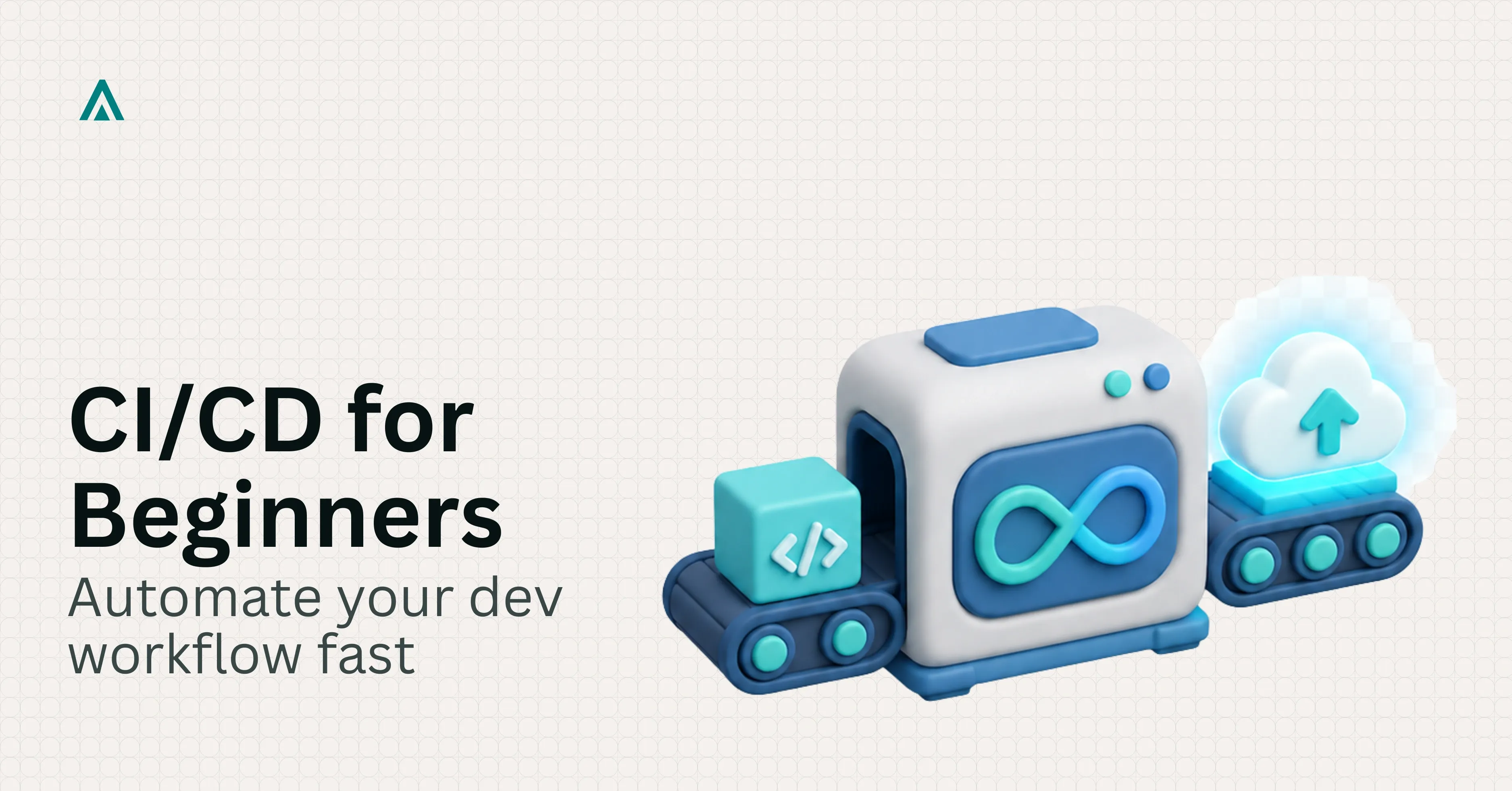
CI/CD cuts change failure rates to under 5%. Build your first GitHub Actions pipeline for Node.js, avoid common pitfalls, and ship reliable code faster.
Frequently Asked Questions
- CI/CD stands for Continuous Integration and Continuous Delivery or Deployment. CI automates the process of merging code changes and running tests on every commit, catching bugs before they reach production. For small teams, CI/CD removes manual coordination overhead, reduces integration conflict risk, and provides a consistent quality gate on every code change regardless of team size. The automation investment pays back in the first month of use through avoided incident time.
- Continuous Delivery means every successful build is ready to deploy but requires a human approval for the final production release. Continuous Deployment removes the human step and ships automatically after every passing build. Continuous Delivery suits teams with release windows or regulatory requirements. Continuous Deployment suits services with high test confidence, automated rollback, and solid monitoring in place.
- Use GitHub Secrets under Settings > Secrets and Variables > Actions. Add each secret by name and reference it in YAML as `${{ secrets.SECRET_NAME }}`. GitHub masks secret values in all log output. Use environment-scoped secrets for production deployments to enforce least-privilege access per deployment environment. Never hardcode credentials in YAML files committed to version control.
- DORA metrics are four delivery performance indicators: Deployment Frequency, Lead Time for Changes, Change Failure Rate, and Time to Restore Service. CI/CD directly improves all four: automated testing cuts change failure rate, pipeline speed reduces lead time, deployment automation increases deployment frequency, and rollback automation reduces time to restore. Elite performers maintain low change failure rates and restore service in under an hour, per DORA research.
- Open the Actions tab, select the failing run, click the failing job, and expand each step to view stdout and stderr. Exit codes confirm which command failed. Add a temporary debug step printing `node --version`, `npm --version`, and non-secret environment variables. Enable step debug logging by setting the `ACTIONS_STEP_DEBUG` repository secret to `true` for verbose output from every action in the workflow.
Don't Miss What's Next
Subscribe to newsletter
Tags:
CI/CD Basics
GitHub Actions
Continuous Integration
Continuous Deployment
Node.js Pipeline
DevOps
Developer Tooling
Get in Touch
Our team will get back to you within 24 hours.