Stablecoin Design: Collateralised vs Algorithmic Risk Brief
Table of Contents
Table of Contents
Share

Collateralised stablecoins held $1.2B in Treasurys backing DAI by June 2023. Algorithmic UST erased billions in May 2022. Assess the risk before allocating.
Frequently Asked Questions
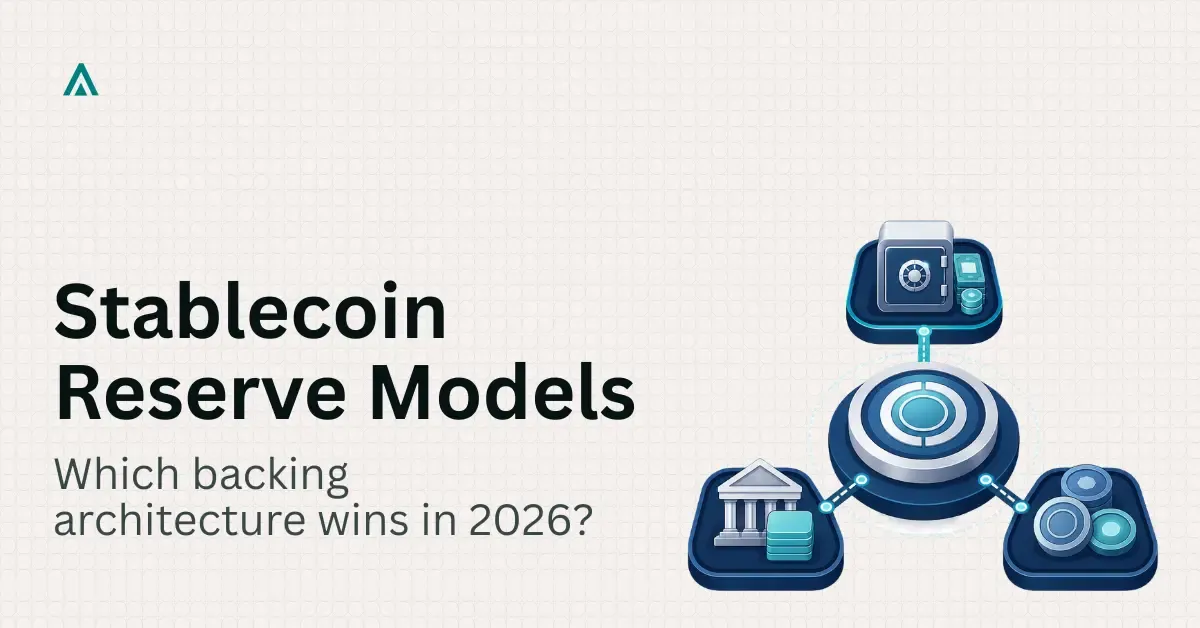
- Fiat and treasury-backed stablecoins like USDC hold reserves in cash and short-dated US Treasurys, custodied by regulated banks and asset managers. Overcollateralised on-chain designs like DAI require crypto or treasury collateral above the full value of issuance. Neither design is riskless, reserve quality, custody, and redemption mechanics still determine downside, but both carry structurally lower collapse risk than algorithmic designs that rely on a second token to absorb demand shocks.
- The Financial Stability Board finalised global high-level recommendations for stablecoin oversight in July 2023, requiring guaranteed par redemption, governance disclosure, and pre-launch regulatory compliance for global stablecoin arrangements. Jurisdictions including the EU under MiCA and Singapore under MAS frameworks were building issuer-specific reserve and redemption rules through 2023, with allocators expected to see formal licensing regimes phase in through 2024.
- Direct stablecoin holding yields no return by design, the value proposition is capital preservation and settlement speed, not appreciation. Institutional allocators instead capture return by backing the infrastructure layer: reserve management mandates, redemption rails, and compliance tooling for issuers. Treasury-backed reserve mandates on entities like Circle's USDC have channelled billions into short-dated government paper, a yield-bearing allocation with stablecoin-driven demand rather than a stablecoin-native return.
Don't Miss What's Next
Subscribe to newsletter
Tags:
Stablecoins
DeFi
Investment Brief
Digital Asset Infrastructure
Get in Touch
Our team will get back to you within 24 hours.