Embedded Finance Brief: DeFi Primitives as B2B Revenue Layer
Table of Contents
Table of Contents
Share
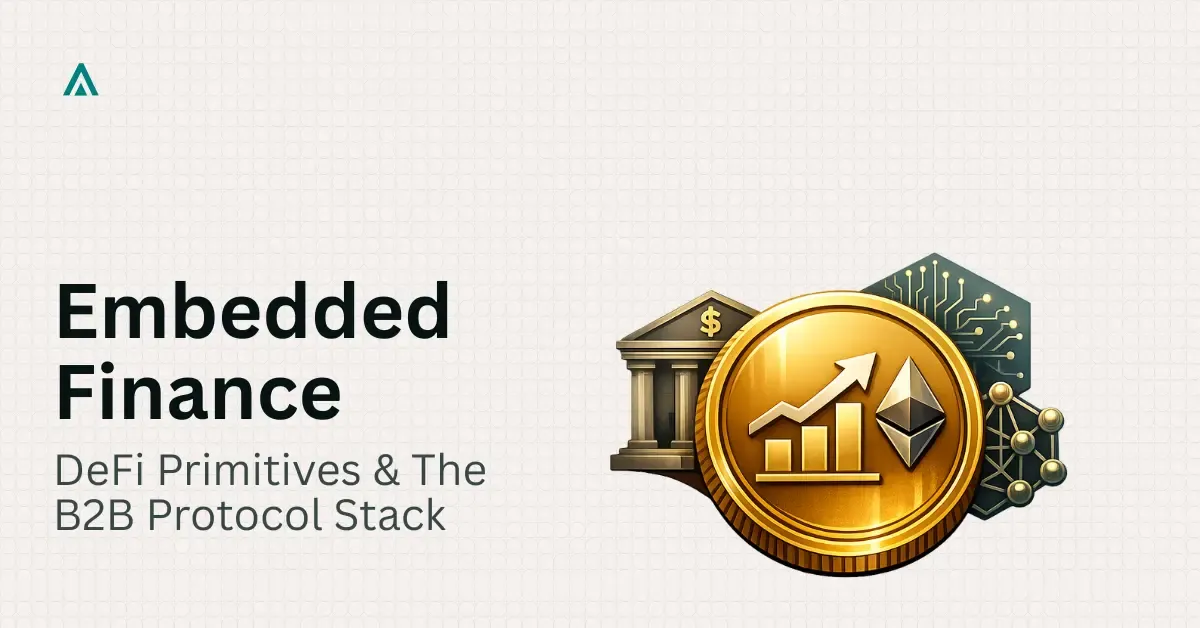
Capital allocators: DeFi primitives now underwrite embedded finance revenue. Review the market signal and assess vendor risk before deploying capital in 2024.
Frequently Asked Questions
- It is the practice of a non-financial B2B platform, such as a payroll tool or a marketplace, offering lending, custody, or yield features by plugging into audited decentralized finance protocols rather than building banking infrastructure or securing a lending license. The platform earns a spread on capital already inside its product, and the protocol supplies settlement and risk logic.
- Safety depends on the audit history of the underlying protocol and the credit-risk logic wrapping it, not the embedded finance label. Allocators should treat the smart contract layer as the primary diligence surface, verify exploit history through post-mortem archives, and confirm the vendor separates identity and compliance logic from settlement logic so regulatory updates do not require full redeployment.
- In the European Union, the Markets in Crypto-Assets Regulation entered into force on 29 June 2023 and sets authorisation and disclosure requirements for crypto-asset service providers, with application phasing through 2024. The Financial Stability Board's February 2023 report on decentralised finance risk also frames the supervisory expectations regulators apply to platforms routing B2B capital through DeFi rails.
Don't Miss What's Next
Subscribe to newsletter
Tags:
Embedded Finance
DeFi
B2B Infrastructure
Investment Thesis
Get in Touch
Our team will get back to you within 24 hours.