AI Meets Blockchain: Building the Next Digital Economy
Table of Contents
Table of Contents
Share
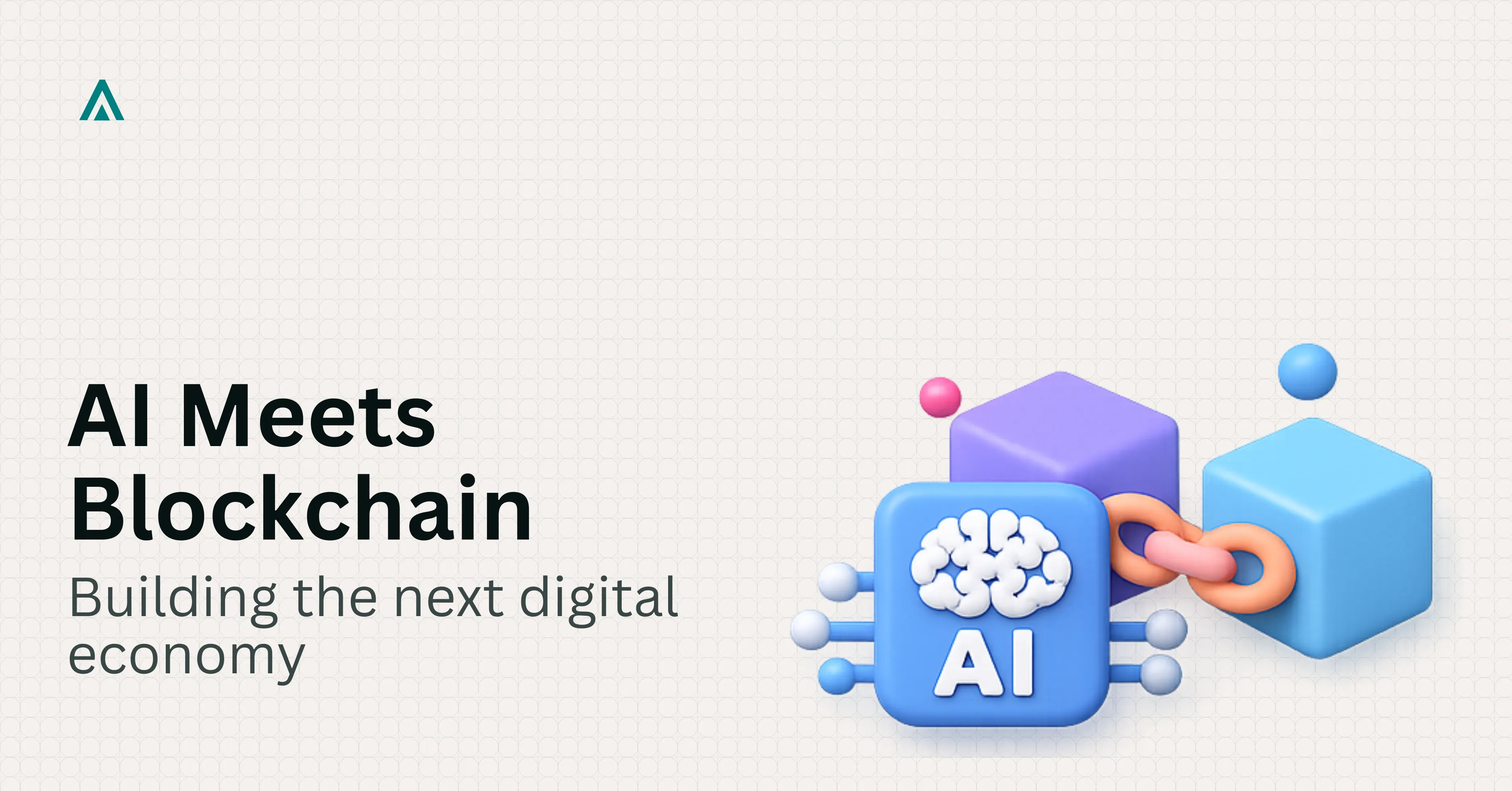
How AI systems and blockchain infrastructure converge to enable autonomous payments, verifiable data, and smarter supply chains for enterprise operators in 2025.
Frequently Asked Questions
- AI and blockchain convergence means autonomous software systems can now hold wallets, verify identities, execute agreements, and settle payments without human involvement. For business operators this removes manual steps from treasury workflows, payment reconciliation, and supply chain settlement, reducing operational cost and counterparty risk.
- Stablecoins provide price-stable programmable money that AI agents can transact with in real time. An agent can hold a stablecoin wallet, trigger micropayments for API access or data services, and settle cross-border invoices in under one second for less than one cent. No bank account or intermediary is needed.
- AI agent transactions on blockchain are subject to FATF travel rule obligations for transfers above threshold amounts, AML screening requirements for wallet addresses, and MiCA regulations where stablecoin issuers are EU-facing. Operators must also ensure smart contract logic matches their legal entity obligations under applicable contract law.
Don't Miss What's Next
Subscribe to newsletter
Tags:
blockchain
automation
smart contracts
stablecoins
digital payments
AI-Web3
Get in Touch
Our team will get back to you within 24 hours.