What MiCA Means for Founders: Non-Legal Guide to Compliance
Table of Contents
Table of Contents
Share
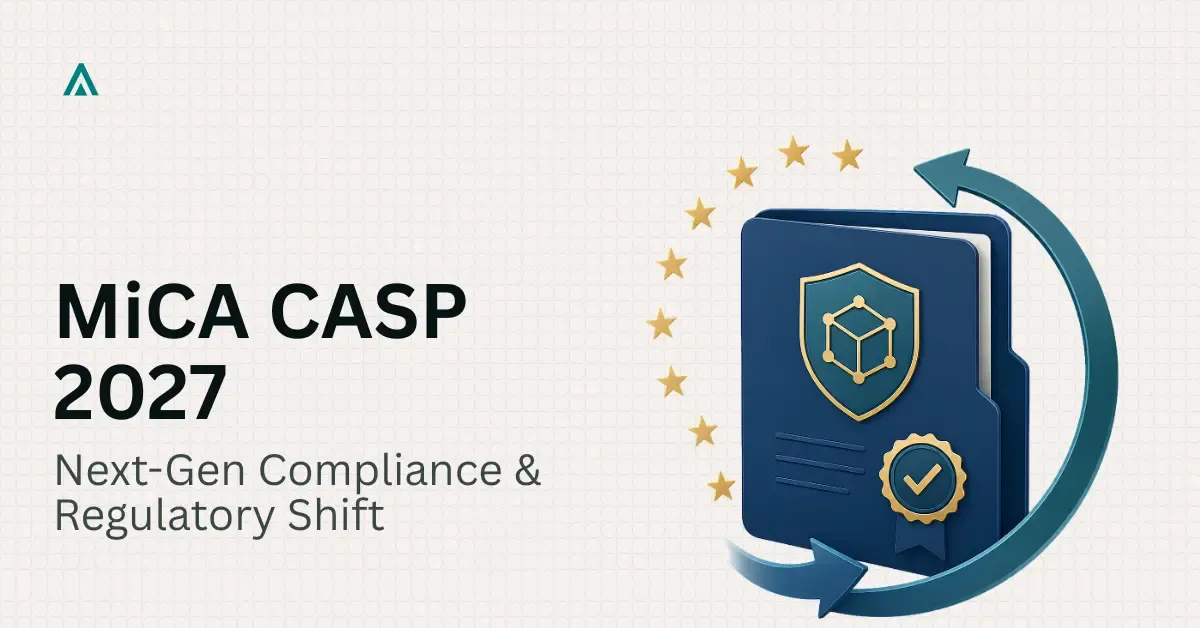
MiCA compliance 2026: founder's guide to EUR 5M fines, July 1 deadline, cost breakdown, and build vs. buy decision framework for blockchain startups globally.
Frequently Asked Questions
- Non-compliance triggers EUR 5 million fines or 3 to 12.5 percent of annual turnover, whichever is higher (EUR-Lex, 2023). Regulators can revoke your license, freeze assets, or bar you from EU markets indefinitely.
- The final compliance deadline is July 1, 2026 (EUR-Lex, 2023). After that date, any crypto-asset service provider without a MiCA license is breaking EU law. ARTs and e-money tokens faced earlier deadlines in mid-2024; general crypto-asset service providers became subject to full enforcement by January 2025.
- Typical startup compliance runs EUR 250,000 to EUR 500,000 (CoinLaw, 2025). Minimum capital requirements sit at EUR 50,000 for advisory services and EUR 150,000 for exchange platforms (ESMA, 2025), but real costs come from hiring compliance staff, building governance systems, and audit cycles.
- Not necessarily. If your product is simple, for example a loyalty token for a gaming platform, you may only need regulatory guidance and legal review of your white paper. If you are running a crypto exchange or custodial wallet, yes, you will benefit from a specialized legal partner who knows MiCA article by article. The alternative is building compliance in-house with dedicated hiring.
Don't Miss What's Next
Subscribe to newsletter
Tags:
MiCA
Compliance
Web3 Founders
Fintech
Regulatory
Founder Blog
Get in Touch
Our team will get back to you within 24 hours.