Cross-Chain Message Passing: How Blockchains Stay in Sync
Table of Contents
Table of Contents
Share
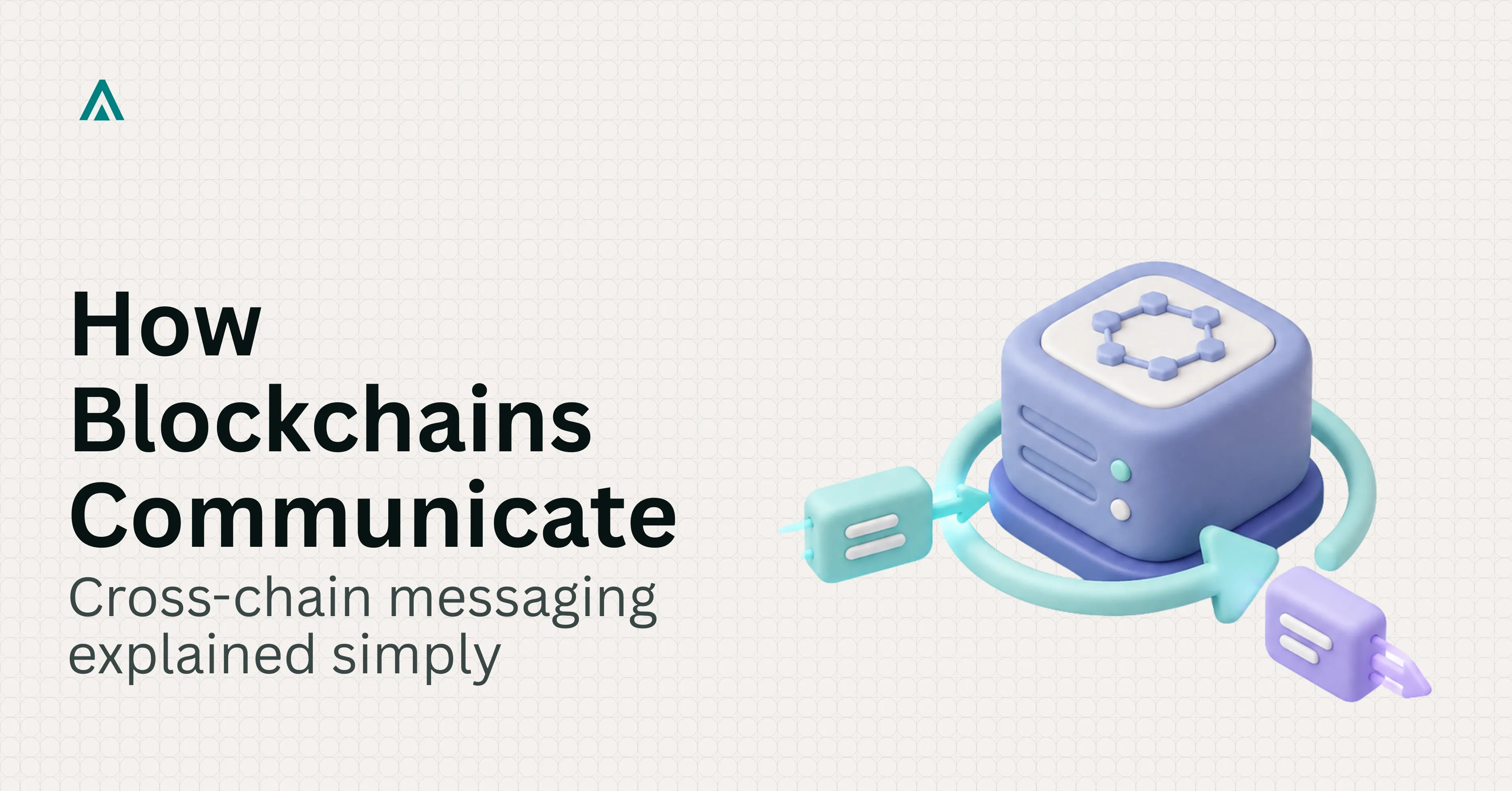
How cross-chain message passing works, why $2.8B has been lost to bridge exploits, and how teams build atomic, verifiable cross-chain interop in 2025.
Frequently Asked Questions
- Cross-chain message passing is the mechanism by which one blockchain sends a verifiable instruction or proof to another blockchain without sharing state. The source chain locks or records an action, encodes it as a cryptographically signed message, and a relayer carries that message to the destination chain. A light client or oracle on the destination chain verifies the message against the source chain's block headers before executing the corresponding action.
- Atomicity in cross-chain transactions means either both sides of the operation complete or neither does. Protocols like IBC implement this through a handshake sequence: the source chain locks funds and records an outbound packet, the destination chain acknowledges receipt and executes the action, and the source chain finalizes once it receives the acknowledgement. If the destination chain rejects the packet or a timeout passes, the source chain reverts the lock and returns the funds to the user.
- A light client is a compact verification module that runs on the destination chain and tracks the block headers of the source chain. Instead of downloading the full source chain state, it uses Merkle proofs to confirm that a specific event or transaction was included in a finalized block. This allows the destination chain to trust incoming messages without relying on a centralized oracle or multisig committee.
- Bridges that rely on trusted validators or multisig committees introduce a centralized failure point: if enough signers are compromised or collude, the attacker can forge withdrawal proofs. Bridges that accept optimistic proofs without challenge periods allow fraudulent messages to execute before anyone can dispute them. Poor input validation on the receiving contract, missing re-entrancy guards, and upgradeable proxy patterns that allow silent logic swaps are additional attack surfaces that have each contributed to nine-figure losses.
- IBC uses on-chain light clients on both the source and destination chains, making verification fully trustless at the cost of requiring both chains to support the IBC standard natively. LayerZero uses a configurable security model where each application selects a Decentralized Verifier Network and an executor; verification is handled off-chain but is permissionless and cryptographically attested. IBC is natively sovereign across Cosmos chains; LayerZero supports 80-plus EVM and non-EVM chains and is easier to integrate for teams that cannot modify the destination chain.
Don't Miss What's Next
Subscribe to newsletter
Tags:
blockchain interoperability
cross-chain communication
message passing in blockchain
web3 development
decentralized applications
Interoperability
Get in Touch
Our team will get back to you within 24 hours.