The Graph Indexer Architecture, Allocation and Disputes
Table of Contents
Table of Contents
Share
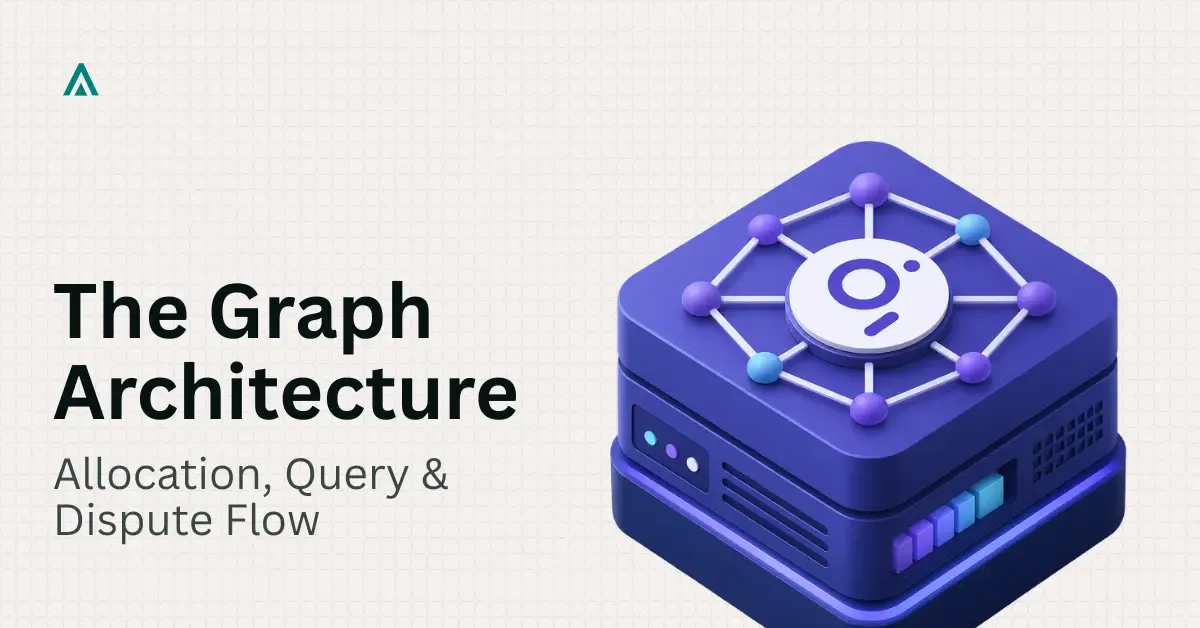
Indexer architecture on The Graph Protocol: allocation strategy, staking mechanics, and dispute resolution for production subgraph deployments in 2024.
Frequently Asked Questions
- An indexer runs Graph Node software, stakes a minimum of 100,000 GRT, and processes subgraph data to serve GraphQL queries. Indexers earn query fee rebates and indexing rewards funded by three percent annual protocol issuance, and their staked GRT is subject to slashing if they submit an incorrect Proof of Indexing or a fraudulent query attestation (The Graph Docs, January 2024).
- Staking locks GRT against an indexer's identity as a network-wide security bond. Allocation assigns a portion of that staked GRT to a specific subgraph deployment for up to 28 epochs, and only allocated stake earns indexing rewards on that subgraph. An indexer can spread stake across many allocations at once, but each allocation must be closed with a valid Proof of Indexing to claim rewards.
- A network Arbitrator appointed through The Graph's decentralized governance rules on indexing and query disputes. The Arbitrator must settle a dispute within one week of submission and follows the Arbitration Charter (GIP-0009), which allows a draw ruling when a fault stems from a Graph Node determinism bug rather than deliberate misbehavior.
- A fisherman must lock a minimum deposit of 10,000 GRT to open either a query attestation dispute or a Proof of Indexing dispute. If the dispute is rejected, the deposit is burned. If it is ruled a draw, the deposit is returned. If the fisherman wins, the indexer's stake is slashed and a share of the slashed amount is awarded to the fisherman.
Don't Miss What's Next
Subscribe to newsletter
Tags:
The Graph Protocol
Indexer Architecture
Web3 Infrastructure
GRT Staking
Cryptography
Get in Touch
Our team will get back to you within 24 hours.