Chainlink VRF: Verifiable Randomness for Gaming & NFTs
Table of Contents
Table of Contents
Share
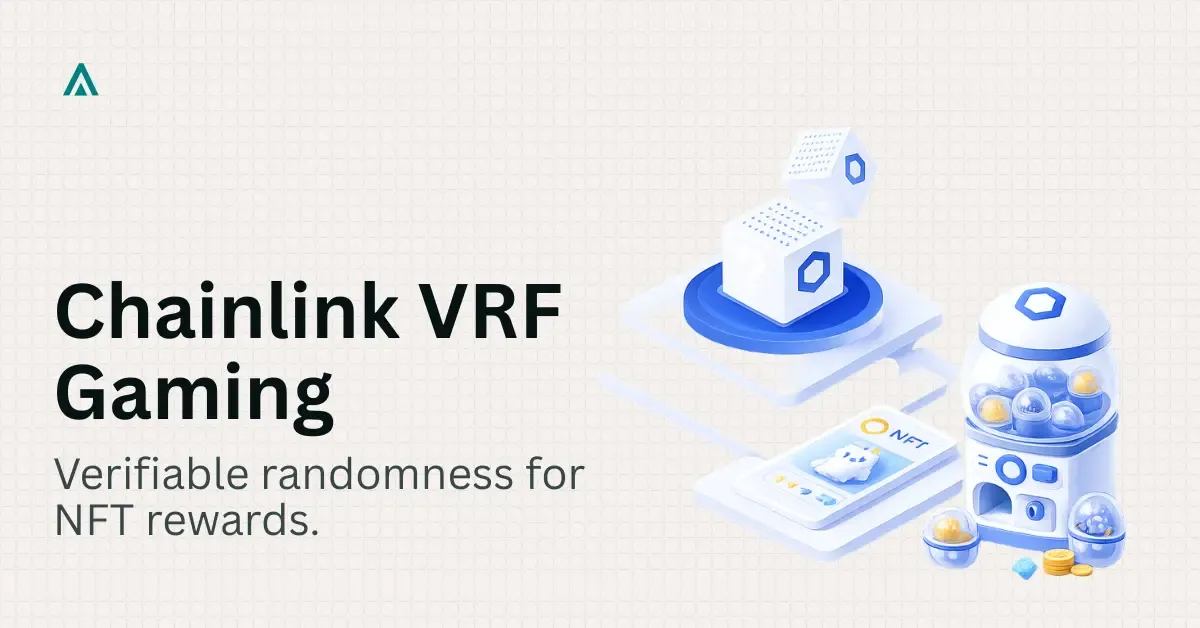
Chainlink VRF fulfilled 17.7M randomness requests across 6,700+ contracts by Q3 2023. Assess the full investment case for on-chain RNG in gaming and NFTs.
Frequently Asked Questions
- Chainlink VRF (Verifiable Random Function) is a cryptographically provable on-chain random number generator. It generates a random value along with a cryptographic proof, allowing any observer to independently verify the result was not manipulated. Gaming projects use it to power loot box openings, character trait assignments, NFT rarity draws, and matchmaking outcomes where players require transparent, tamper-proof randomness they can audit on-chain.
- Pseudo-random number generators (PRNGs) in smart contracts, such as those using block hash or timestamp as entropy sources, can be predicted or manipulated by miners and front-runners. Chainlink VRF solves this by generating randomness off-chain using a private key and delivering both the random number and a cryptographic proof on-chain. The proof is verified before the contract uses the result, ensuring no party including Chainlink node operators can bias the outcome.
- NFT loot boxes operate in a contested regulatory zone. Belgium and the Netherlands classified traditional loot boxes as gambling in 2018 and 2019 respectively, setting a precedent that on-chain equivalents may face similar scrutiny. Projects must consult applicable gambling laws by jurisdiction, maintain transparent probability disclosures, and consider whether randomized digital asset distribution triggers securities classification under local law. Verifiable randomness via Chainlink VRF supports compliance by providing an auditable, provably fair distribution record.
Don't Miss What's Next
Subscribe to newsletter
Tags:
Chainlink VRF
NFT
Blockchain Gaming
On-Chain Randomness
Web3 Infrastructure
Get in Touch
Our team will get back to you within 24 hours.