Foundry vs Hardhat: 2024 Smart Contract Tooling Brief
Table of Contents
Table of Contents
Share
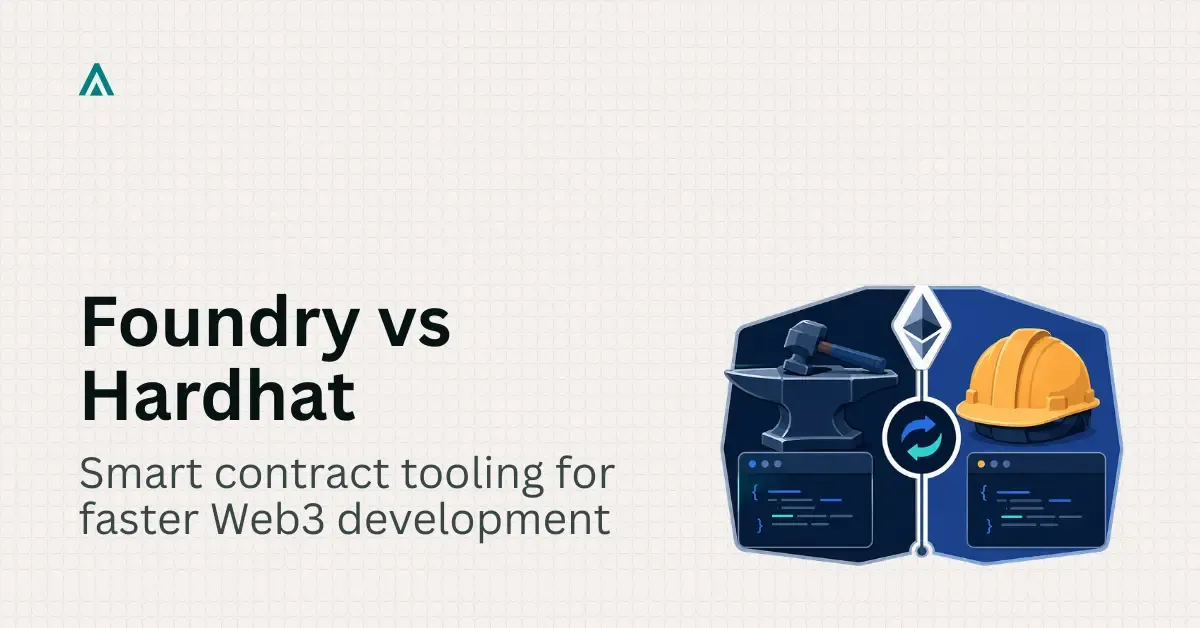
Foundry vs Hardhat investment brief for smart contract teams: how tooling choice shapes audit cost, hiring velocity, and time-to-market in 2024. Build smarter.
Frequently Asked Questions
- Foundry is a Rust-based smart contract toolkit where tests are written in Solidity and run natively, giving fast compile and test cycles plus built-in fuzzing. Hardhat is a JavaScript and TypeScript framework with tests written in those languages and a large plugin ecosystem. Foundry favours raw test speed and Solidity-native workflows, while Hardhat favours integration with web frontends and existing JavaScript tooling.
- Neither tool wins outright. Teams shipping protocol logic that needs deep fuzzing and fast test runs tend to standardise on Foundry. Teams whose product is tightly coupled to a JavaScript or TypeScript frontend and existing Node tooling often keep Hardhat. Many production teams in 2024 run both, using Foundry for unit and fuzz testing and Hardhat for deployment scripting and frontend integration.
- Yes. A test suite with high coverage and property-based fuzz tests reduces the findings an auditor surfaces and shortens the audit cycle. Foundry's native fuzzing and invariant testing make property coverage cheaper to write, which can lower the back-and-forth that drives audit hours. Tooling does not replace an audit, but it changes how much an audit costs.
Don't Miss What's Next
Subscribe to newsletter
Tags:
Smart Contracts
Developer Tooling
Web3 Strategy
Get in Touch
Our team will get back to you within 24 hours.

![Top 10 Gen AI Tools for Web3 Developers in 2026 [Ranked]](https://images.ancilar.com/Blog_Thumbnails_Variations_23_c4314cdbd9.webp)